

 Sign in
 CN
CN

Elastic vs. Rigid Lockable Gas Springs: Which One Do You Need?
 Mar 25, 2026|
 View:22
When designing equipment that requires precise positioning and safety, choosing the right type of lockable gas spring becomes critical. The difference between elastic and rigid lockable gas springs might seem technical, but it directly impacts user safety, comfort, and equipment performance across medical, furniture, and industrial applications.
Key Takeaways
Elastic lockable gas springs use nitrogen compression for flexible positioning with a slight bounce effect, ideal for comfort-focused applications
Rigid lockable gas springs employ oil chambers to achieve zero-deflection locking, essential for medical beds and safety-critical equipment
Medical applications typically require rigid locking to prevent accidental movement during patient care and treatment procedures
Furniture and office chairs often benefit from elastic locking for ergonomic comfort and natural cushioning
Selection depends on three factors: safety requirements, user comfort preferences, and application-specific load conditions
Understanding Lockable Gas Spring Technology
A lockable gas spring combines the lifting assistance of a standard gas spring with an adjustable locking mechanism. According to ISO 11901 standards, these devices are pressurized with nitrogen and feature an internal valve system that controls piston movement.
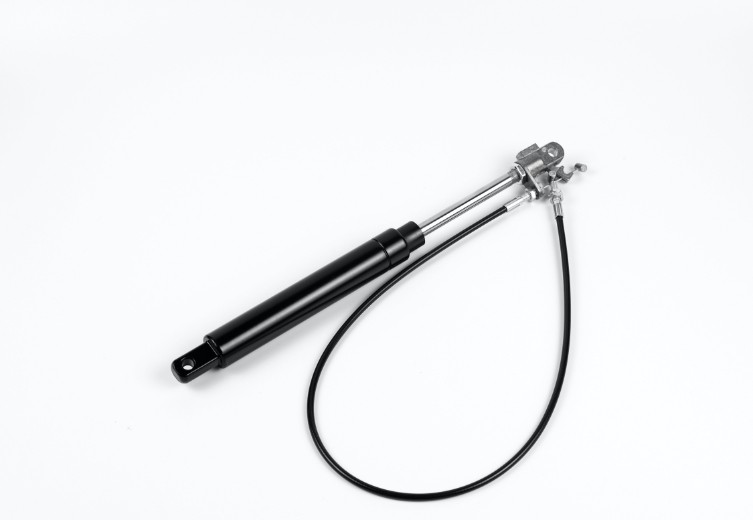
When the release pin is pressed, the internal valve opens, allowing gas or oil to flow freely between chambers. This enables smooth height or angle adjustment. When released, the valve closes instantly, locking the piston rod at the current position. The key distinction lies in what medium creates the locking force.
Elastic Lockable Gas Springs: Flexibility and Comfort
How Elastic Locking Works
Elastic lockable gas springs achieve their locking function through nitrogen gas compression alone. When locked, the piston remains within a gas-filled chamber. Because nitrogen is compressible, the locked position exhibits a characteristic spring-like behavior under external force.
This creates what engineers call a "cushioning effect" where the spring can absorb minor impacts while maintaining general position stability. The degree of flexibility depends on factors including rod diameter, cylinder size, and initial gas pressure, typically ranging from 50N to 1000N in standard models.
Advantages of Elastic Locking
Comfortable user experience: The slight give under load creates a more natural feel, especially beneficial in seating applications
Impact absorption: Can handle sudden forces without rigid shock transfer to the user or equipment frame
Cost-effective design: Simpler internal construction without oil chambers or separator pistons reduces manufacturing complexity
Any mounting orientation: Can be installed vertically, horizontally, or at any angle without performance degradation
Lower maintenance: No oil seals or fluid management requirements simplify long-term upkeep
Best Applications for Elastic Locking
Elastic lockable gas springs excel in environments where user comfort takes priority over absolute rigidity. Common applications include:
Ergonomic office chairs with adjustable backrests
Massage and recliner chairs where cushioning enhances relaxation
Monitor arms and TV brackets requiring positioning flexibility
Adjustable workbenches in light-duty applications
Automotive seat tilt mechanisms
Industrial equipment covers with moderate weight
Rigid Lockable Gas Springs: Absolute Stability
How Rigid Locking Works
Rigid lockable gas springs achieve their non-deflection characteristic through an oil chamber system. Unlike elastic versions, the piston moves through incompressible hydraulic oil when locked. This fundamental difference creates absolute positional stability.
Two configurations exist: rigid in compression and rigid in extension. In compression-locked models, oil fills the space between the piston and cylinder bottom, preventing downward movement. Extension-locked versions position oil between the piston and cylinder guide, resisting upward forces. Both types may include a separator piston to divide the oil and gas chambers, allowing installation in any orientation.
Advantages of Rigid Locking
Zero deflection: Maintains exact position even under maximum rated load without any movement
Enhanced safety: Critical for medical and industrial applications where position drift could cause injury
Higher load capacity: Can support forces up to 5000N in some models without position shift
Precision positioning: Ideal for applications requiring exact height or angle settings
Regulatory compliance: Meets strict safety standards required for medical device certification
Best Applications for Rigid Locking
Rigid lockable gas springs are the standard choice when absolute positional stability is non-negotiable. Primary applications include:
Hospital beds and examination tables where patient safety depends on stable positioning
Surgical equipment and operating tables requiring precise height control
Over-bed tables in healthcare facilities
Heavy industrial machinery access panels
Aerospace cabin equipment with strict safety protocols
Height-adjustable standing desks supporting heavy workloads
Emergency stretchers and patient transport equipment
Performance Comparison: Key Differences That Matter
| Characteristic | Elastic Lockable Gas Spring | Rigid Lockable Gas Spring |
|---|---|---|
| Locking Medium | Compressed nitrogen gas | Hydraulic oil chamber |
| Deflection Under Load | 5-15mm typical bounce effect | Zero deflection (0mm) |
| Force Range | 50N - 1000N standard | 100N - 5000N extended |
| Installation Flexibility | Any orientation | Vertical preferred (any with separator piston) |
| User Feel | Cushioned, responsive | Solid, immovable |
| Typical Cost | Lower (simpler design) | Higher (oil system complexity) |
| Maintenance Needs | Minimal gas pressure check | Oil seal inspection required |
| Temperature Range | -20°C to +80°C standard | -20°C to +80°C (oil viscosity dependent) |
| Safety Certification | Suitable for furniture, general use | Required for medical device approval |
Medical Bed Applications: Why Rigid Locking Matters
Healthcare environments present unique challenges that make rigid lockable gas springs essential rather than optional. When a medical professional positions a hospital bed at a specific angle for patient examination or treatment, that position must remain absolutely stable.
Consider these critical scenarios where elastic locking would be inadequate:
Patient transfer procedures: During transfers between bed and wheelchair, any deflection could cause falls or injuries to patients with limited mobility
Surgical positioning: Operating tables require zero movement during procedures where millimeter-level precision affects outcomes
Emergency response: In Trendelenburg positions for shock treatment, the bed angle must remain fixed regardless of patient movement
Bariatric care: Heavy patients create substantial loads that would cause elastic springs to compress unpredictably
Medical equipment manufacturers consistently specify rigid lockable gas springs because regulatory bodies including the FDA and European Medical Device Regulation require demonstrable position stability under all rated load conditions. This is not merely best practice—it is a legal requirement for device approval.
Furniture and Ergonomic Applications: When Elastic Excels
While medical applications demand rigidity, furniture designers often prefer the user experience benefits of elastic locking. The slight cushioning effect serves both practical and psychological purposes.
In office chairs, the elastic response provides continuous micro-adjustments that accommodate shifting body positions throughout the workday. Users report this feels more natural than the hard stop of rigid systems. Similarly, in massage chairs and recliners, the gentle give under body weight enhances the sensation of comfort.
Industrial applications like adjustable monitor arms benefit from elastic locking because users frequently reposition screens. The slight flexibility forgives minor bumps without requiring release actuation, while still maintaining the general viewing position reliably.
Selection Criteria: Making the Right Choice
Choosing between elastic and rigid lockable gas springs requires evaluating three primary factors beyond simple preference.
Safety Requirements
If the application involves potential injury from position shift, rigid locking is mandatory. This includes medical equipment, child-accessible furniture, heavy industrial panels, and any system where users may place body weight on an adjustable surface. Regulatory compliance often dictates this choice rather than leaving it to engineering judgment.
Load Conditions
Static loads above 800N typically perform better with rigid systems. Dynamic loads—situations where users frequently add or remove weight from the adjusted component—may benefit from elastic cushioning. Calculate the maximum expected load and include a safety factor of at least 1.5x when selecting force ratings.
User Experience Goals
For premium furniture and ergonomic products, the tactile feedback matters to users. Elastic locking reads as responsive and comfortable. Rigid locking communicates stability and precision. Neither is objectively superior—the choice depends on brand positioning and target customer expectations.
Need Expert Guidance on Lockable Gas Springs?
Whether you need rigid locking for medical applications or elastic systems for furniture, Colewell provides professional solutions backed by IATF16949 certification and 15+ years of manufacturing expertise. Our engineering team helps you select the optimal lockable gas spring configuration for your specific requirements.
Request Technical ConsultationTechnical Specifications and Standards Compliance
Both elastic and rigid lockable gas springs must meet specific technical standards for commercial use. International standards including ISO 11901 establish testing protocols for force measurement, cycle life, and safety factors.
Standard testing parameters include:
Cycle life testing: Minimum 50,000 lock/unlock cycles without performance degradation
Force tolerance: ±5% variation from nominal force rating across temperature range
Locking reliability: Must hold maximum rated load for 72 hours without position drift exceeding 2mm for elastic or 0.5mm for rigid types
Corrosion resistance: 96-hour salt spray testing per ASTM B117 standards for outdoor or marine applications
Quality manufacturers provide test certificates documenting compliance with these benchmarks. When specifying lockable gas springs for critical applications, request documentation verifying standards adherence rather than relying on general specifications.
Installation and Mounting Considerations
Proper installation significantly affects the performance and longevity of lockable gas springs. Several factors require attention during the design phase.
Mounting Orientation
Elastic lockable gas springs function in any orientation without performance penalty. Rigid compression-locked versions without separator pistons must install with the piston rod pointing downward to maintain oil positioning. Extension-locked rigid springs mount with rod upward. Models equipped with separator pistons accommodate any orientation but cost more.
Connection Points
Both ends require secure mounting through appropriate connectors. Common options include ball joints, clevis mounts, and threaded studs. The connection must allow angular movement during travel without binding, typically requiring ±5 degrees of rotational freedom. Under-designed mounting points cause premature wear and potential failure.
Release Mechanism Integration
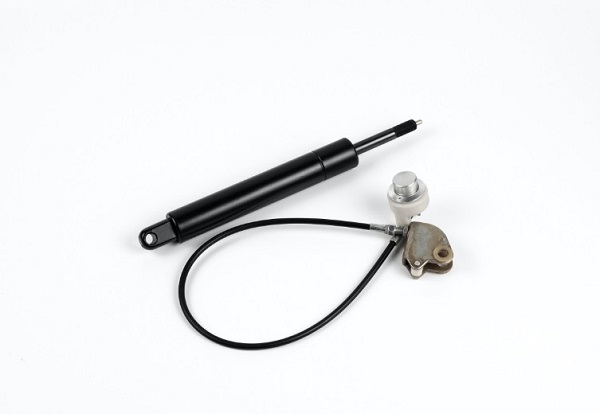
The locking release requires accessible actuation. Options include direct-mount buttons, Bowden cable systems to remote buttons, and lever-activated release. Cable systems introduce slight response lag but enable cleaner industrial design. Direct release provides instantaneous response but limits placement flexibility.
Cost Analysis and Total Ownership Considerations
Initial purchase price represents only part of the economic equation when selecting lockable gas springs. Total cost of ownership includes procurement, installation, maintenance, and replacement over the product lifecycle.
Elastic lockable gas springs typically cost 20-30% less than equivalent rigid versions due to simpler construction. However, rigid springs may prove more economical in high-reliability applications by reducing warranty claims and liability exposure.
Maintenance requirements differ substantially. Elastic models need only occasional pressure verification, while rigid versions require periodic oil seal inspection. In high-cycle applications exceeding 100 operations daily, maintenance costs can offset initial savings from choosing elastic systems.
For medical device manufacturers, the cost of regulatory compliance documentation heavily favors established rigid locking solutions with proven certification history. The engineering expense to certify a new elastic design for medical use may exceed the component cost savings by 10x or more.
Conclusion: Match the Technology to the Need
The choice between elastic and rigid lockable gas springs is not about which technology is superior—both serve essential roles in modern engineering. Elastic systems deliver comfort and flexibility where user experience matters most. Rigid systems provide the absolute stability required when safety cannot be compromised.
Medical beds, surgical equipment, and patient transfer systems demand rigid locking without exception. The cost and complexity premium is justified by regulatory requirements and liability protection. Furniture, ergonomic accessories, and light industrial applications often achieve better results with elastic locking that balances stability with comfort.
When specification time arrives, start with the application requirements rather than defaulting to either technology. Evaluate safety criticality first, then load conditions, and finally user experience priorities. For applications with reliable suppliers like Colewell offering both technologies with comprehensive technical support, the selection process becomes a matter of matching capability to need rather than settling for available options.
Frequently Asked Questions
What is the main difference between elastic and rigid lockable gas springs?
Elastic lockable gas springs use compressed nitrogen for locking, creating a slight bounce effect under load. Rigid lockable gas springs use hydraulic oil chambers to achieve zero deflection when locked. This fundamental difference affects user feel, safety level, and application suitability.
Why do medical beds require rigid locking instead of elastic?
Patient safety regulations require hospital beds to maintain absolute position stability during transfers, examinations, and procedures. Elastic locking would allow movement under patient weight, creating fall risks and positioning errors during critical care activities. Regulatory approval mandates rigid locking for medical equipment.
Can elastic lockable gas springs be used in any mounting orientation?
Yes, elastic lockable gas springs work in any orientation because they use only nitrogen gas without oil chambers. Rigid versions without separator pistons must mount vertically with specific rod orientation to maintain oil positioning. Rigid models with separator pistons accommodate any orientation but cost more.
How much load can lockable gas springs typically support?
Elastic lockable gas springs typically range from 50N to 1000N force capacity. Rigid lockable gas springs extend from 100N to 5000N in specialized models. Selection depends on application weight, safety factors, and whether the load is static or dynamic during operation.
What maintenance do lockable gas springs require?
Elastic models need minimal maintenance beyond periodic pressure verification. Rigid versions require oil seal inspection and occasional fluid level checks. Both types should undergo cycle testing at manufacturer-recommended intervals, typically after 25,000 operations or annually in critical applications.
Are rigid lockable gas springs more expensive than elastic types?
Yes, rigid lockable gas springs typically cost 20-30% more due to the oil chamber system, separator piston, and additional seals required. However, this premium is justified in safety-critical applications where liability exposure from elastic deflection would create greater total cost.
How long do lockable gas springs typically last?
Quality lockable gas springs are rated for 50,000 to 100,000 lock/unlock cycles depending on design and application conditions. In typical office furniture use with 5-10 adjustments daily, this translates to 15-20 years of service life. High-cycle industrial applications may require replacement after 3-5 years.
Can I replace an elastic lockable gas spring with a rigid one?
Replacement requires matching force rating, stroke length, and mounting dimensions. Beyond physical fit, consider whether your application truly needs rigid locking, as the different feel may affect user experience. Consult with technical support to verify compatibility before substituting between types.