

 Sign in
 CN
CN

What Is a Gas Spring Cylinder? A Complete Guide
 Jul 16, 2025|
 View:100
A gas spring cylinder is a sealed pneumatic device that uses compressed gas to provide smooth, controlled motion and support lifting forces. You find these mechanical components essential in automotive, furniture, and industrial applications where reliable lifting, lowering, and positioning matter most.
Gas spring cylinders can provide up to 10,000N of force while maintaining consistent performance across thousands of cycles. You benefit from a gas spring cylinder by reducing manual effort, improving safety, and enabling precise motion control in your applications.
Key Takeaways
Gas spring cylinders use compressed nitrogen gas to provide a smooth, controlled lifting and lowering motion
These devices reduce manual effort by up to 80% compared to traditional mechanical springs
Proper selection based on force requirements and stroke length ensures optimal performance and longevity
Regular maintenance and quality components from trusted suppliers extend service life significantly
Gas spring cylinders offer superior damping characteristics and consistent force output across temperature ranges
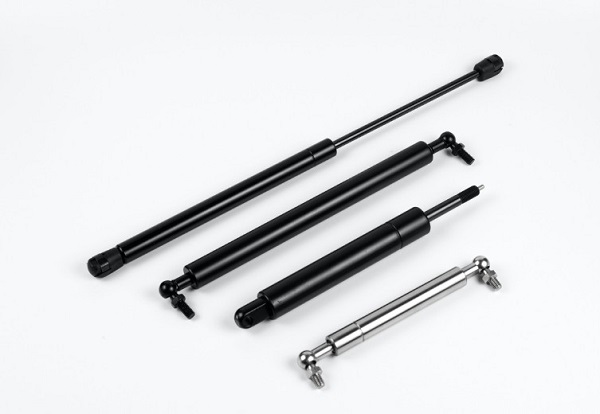
Gas Spring Cylinder Overview
What Is a Gas Spring Cylinder?
You may hear the terms gas spring cylinder, gas strut, or pneumatic cylinder used to describe the same device. A gas spring cylinder is a sealed pneumatic component that contains compressed nitrogen gas and hydraulic oil within a cylinder tube. This system creates controlled motion by using gas pressure to extend the piston rod and oil damping to control the movement speed.
Note: Gas spring cylinders help you achieve smooth lifting motion, support heavy loads, and provide precise positioning control in various applications.
You will find several types of gas spring cylinders, each designed for specific force requirements and operating conditions. The table below shows common gas spring cylinder types and their characteristics:
| Gas Spring Type | Force Range | Stroke Length | Performance Features | Common Applications |
| Standard Gas Spring | 50-2000N | 50-500mm | Consistent force output | Automotive hoods, cabinet doors |
| Heavy Duty Gas Spring | 1000-10000N | 100-800mm | High force capacity | Industrial machinery, medical equipment |
| Lockable Gas Spring | 100-3000N | 50-600mm | Position locking capability | Office chairs, adjustable tables |
| Stainless Steel Gas Spring | 50-5000N | 50-700mm | Corrosion resistance | Marine applications, food processing |
These specifications help you choose the right gas spring cylinder for your application. Gas spring cylinders must also meet industry standards such as DIN 4550 and ISO 9001 to ensure quality and performance.
How It Works
A gas spring cylinder uses a simple but effective mechanism. You have a sealed cylinder containing compressed nitrogen gas and hydraulic oil. The piston rod extends due to gas pressure, while the oil provides damping control during compression and extension cycles.
The compressed gas provides the lifting force throughout the stroke
The hydraulic oil controls movement speed and prevents sudden motion
The piston seal maintains gas pressure and prevents leakage
The rod seal protects internal components from contamination
You benefit from gas spring cylinders in several ways:
Gas spring cylinders provide consistent force output regardless of position, unlike traditional coil springs that vary with compression. This linear force characteristic ensures smooth operation and predictable performance.
You can control opening and closing speeds precisely, reducing impact forces and improving user safety.
The self-contained design requires minimal maintenance compared to complex mechanical linkages.
Tip: Industrial applications often use gas spring cylinders because they provide reliable performance in demanding environments while reducing operator fatigue.
Recent industry data highlights the growing importance of gas spring cylinders:
The global gas spring market is projected to reach $3.79 billion by 2028, driven by automotive and furniture applications.
The automotive sector represents 40% of global gas spring cylinder demand.
Nitrogen-filled gas springs dominate over 85% of the market due to their stability and performance.
Stainless steel variants account for 25% of industrial applications where corrosion resistance is critical.
Gas spring cylinders help you achieve smooth operation, reduce manual effort, and improve safety in mechanical systems.
When you plan a gas spring cylinder application, you should:
Calculate the required force based on load weight and mounting geometry
Determine the stroke length needed for the full opening range
Select appropriate mounting hardware for your installation
Consider environmental factors like temperature and humidity
Plan for proper ventilation and access for maintenance
Gas spring cylinders give you the reliability, precision, and efficiency needed in modern mechanical applications. You can support heavy loads, control motion smoothly, and reduce operator effort—all with one compact device.
Components of Gas Spring Cylinder
Cylinder Tube and Piston Assembly
You build a gas spring cylinder using the cylinder tube and piston assembly as core components. The cylinder tube houses the compressed nitrogen gas and hydraulic oil, while the piston assembly controls the damping characteristics. Steel tubes provide strength and durability, making them popular in automotive applications. High-pressure nitrogen gas is enclosed in sealed cylinders to create the spring force. Stainless steel tubes offer corrosion resistance for marine and food processing environments. The piston assembly includes the piston head, seals, and valve system that regulate oil flow during compression and extension cycles.
| Component Type | Key Properties and Benefits | Application Areas | Performance Features |
| Steel Cylinder Tube | High strength, cost-effective, standard pressure rating | Automotive, furniture, general industrial | Supports pressures up to 150 bar, proven reliability |
| Stainless Steel Tube | Corrosion resistant, chemical compatibility, food-safe | Marine, medical, food processing | Maintains performance in harsh environments |
| Aluminum Tube | Lightweight, good thermal conductivity, moderate strength | Aerospace, portable equipment | Reduces overall system weight by 40% |
Piston Rod and Sealing System
The piston rod transfers force from the internal gas pressure to your application. Chrome-plated steel rods resist corrosion and provide smooth operation. The sealing system prevents gas leakage and contamination. Primary seals maintain gas pressure while secondary seals protect against dirt and moisture. You can choose different rod materials based on your environment and force requirements.
Tip:Quality gas springs maintain performance for over 100,000 cycles in normal operating conditions.
End Fittings and Mounting Hardware
End fittings connect the gas spring cylinder to your application. You can select from ball joints, clevis mounts, or threaded connections based on your installation requirements. The mounting hardware must handle the full force output and any side loads. Proper mounting alignment prevents premature wear and ensures smooth operation throughout the stroke length.
Benefits of Applications
Force Assistance and Load Support
You gain significant force assistance when you use gas spring cylinders in your applications. The compressed gas provides a consistent lifting force throughout the entire stroke, reducing manual effort by up to 80% compared to unassisted operation. This force assistance helps you lift heavy hoods, doors, and covers safely. The constant force characteristic means you get the same assistance whether the cylinder is fully compressed or extended.
Studies show that gas spring cylinders maintain force output within ±5% across their operating temperature range. This consistency ensures reliable performance in automotive applications where temperature varies significantly. You also extend component life because the smooth operation reduces stress on hinges and mounting points.
Gas spring cylinders reduce operator fatigue in repetitive lifting tasks
Consistent force output ensures predictable operation
Smooth motion characteristics protect connected components
Motion Control and Safety
A gas spring cylinder gives you precise motion control through its hydraulic damping system. You can adjust opening and closing speeds by modifying the oil flow characteristics. This control prevents sudden movements that could cause injury or damage. Good motion control means you avoid slamming doors, sudden drops, or uncontrolled acceleration.
Tip: Use adjustable damping gas spring cylinders when you need to fine-tune motion characteristics for specific applications.
Reliability and Maintenance
You get reliability benefits from a quality gas spring cylinder system. The sealed design protects internal components from contamination and moisture. Many cylinders operate for over 100,000 cycles without requiring maintenance. Gas spring cylinders support safety by providing fail-safe operation - if pressure drops, the cylinder gradually loses force rather than failing suddenly.
A gas spring cylinder system gives you the tools to manage lifting forces, motion control, and safety in modern applications. You create a more efficient, safer operation for your equipment users.
Gas Spring Cylinder Types
When you select a gas spring cylinder for your application, you find several types designed for different force requirements and operating conditions. Each type offers unique benefits for lifting, positioning, and motion control. Understanding these options helps you make the best choice for your specific needs.
Standard Gas Spring Cylinders
Standard gas spring cylinders give you reliable performance for most general applications. You typically see these used in automotive hoods, cabinet doors, and furniture where moderate forces are required. The standard design provides consistent force output with proven reliability. These cylinders handle forces from 50N to 2000N and stroke lengths up to 500mm. Many applications prefer standard gas spring cylinders because they offer good performance at competitive costs.
Tip: Standard gas spring cylinders work well for most furniture and automotive applications where you need reliable lifting assistance.
Heavy Duty Gas Spring Cylinders
You choose heavy-duty gas spring cylinders when your application requires higher forces or more demanding operating conditions. These cylinders handle forces up to 10,000N and provide enhanced durability for industrial equipment. Heavy-duty versions use thicker cylinder walls, larger diameter rods, and reinforced sealing systems. You often find these in medical equipment, industrial machinery, and aerospace applications where reliability is critical.
A comparison table helps you understand the differences:
| Feature | Standard Gas Spring | Heavy Duty Gas Spring |
| Force Range | 50-2000N | 1000-10000N |
| Cycle Life | 50,000-100,000 | 100,000-500,000 |
| Operating Temperature | -20°C to +80°C | -40°C to +120°C |
| Common Applications | Automotive, furniture | Industrial, medical, aerospace |
Lockable Gas Spring Cylinders
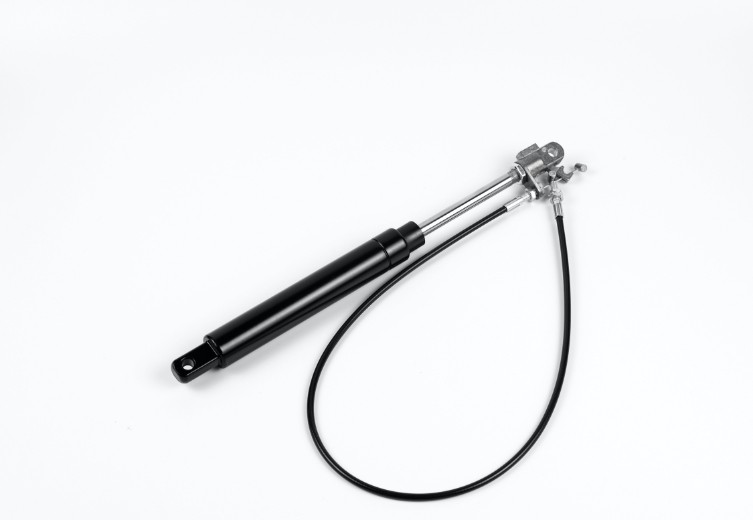
You protect against unwanted movement when you choose lockable gas spring cylinders. These cylinders include a locking mechanism that holds the piston rod in any position along the stroke. The lock engages automatically or through manual activation, depending on your design requirements. Lockable gas spring cylinders help you create adjustable height tables, positioning equipment, and safety supports.
Stainless Steel Gas Spring Cylinders
You select stainless steel gas spring cylinders for applications where corrosion resistance is essential. These cylinders use stainless steel construction for the cylinder tube, piston rod, and hardware. The corrosion resistance makes them ideal for marine environments, food processing, and chemical applications. Stainless steel versions maintain performance in harsh conditions where standard steel would deteriorate.
Note: When you select a gas spring cylinder, consider your force requirements, environmental conditions, and cycle life expectations. Quality suppliers provide technical support to ensure optimal performance.
You improve efficiency, safety, and reliability when you match the right gas spring cylinder type to your application. Always review technical specifications and consult with professionals to ensure your system meets performance requirements.
Gas Spring Cylinder Selection & Care
Choosing a System
You need to match your gas spring cylinder selection to your application's specific requirements. Start by analyzing the force requirements, stroke length, and mounting configuration. Think about these critical factors:
Force Calculation: Determine the required force based on load weight, mounting geometry, and desired operation. Account for gravitational effects and any additional resistance forces.
Stroke Length: Measure the total travel distance needed for full operation. Allow for mounting hardware dimensions and clearance requirements.
Mounting Style: Choose between ball joints, clevis mounts, or threaded connections based on your installation space and load characteristics.
Environmental Conditions: Consider temperature range, humidity, chemical exposure, and vibration levels that affect performance.
Cycle Requirements: Estimate the number of operating cycles per day to select appropriate duty ratings.
Safety Factors: Include appropriate safety margins for force ratings and cycle life expectations.
For detailed sizing guidance, reference technical specifications for common gas spring dimensions to ensure proper selection.
Case studies show that proper selection based on accurate force calculations and environmental assessment significantly improves system reliability and reduces maintenance costs.
Installation Guidelines
Proper installation ensures your gas spring cylinder performs as designed. Follow these essential steps:
Calculate mounting angles and positions to achieve optimal force transfer
Use appropriate mounting hardware rated for full cylinder force
Ensure proper alignment to prevent side loading and premature wear
Allow adequate clearance for full stroke operation
Apply a thread locker to threaded connections where specified
Test operation through full stroke before final installation
Verify force output meets the application requirements
Professional installation teams deliver consistent results and help you avoid common installation errors that can reduce performance and safety.
Maintenance Best Practices
Regular maintenance keeps your gas spring cylinder system operating efficiently. You should:
Inspect cylinder rods for damage, corrosion, or contamination
Check mounting hardware for looseness or wear
Clean external surfaces to prevent contamination
Monitor force output and stroke smoothness
Replace cylinders when performance degrades beyond acceptable limits
Schedule preventive maintenance based on cycle count and operating conditions
Quality gas spring cylinders from reputable suppliers provide longer service life and more predictable maintenance schedules. Industry standards specify a maximum force loss of 10% after 40,000 cycles for quality gas springs.
Tip: Document installation dates and cycle counts to track performance trends and plan replacement schedules effectively.
You now understand how gas spring cylinders support your applications with reliable force assistance and motion control. This system gives you improved safety, reduced operator effort, and consistent performance. When you plan your next project, consult with a trusted gas spring supplier for expert guidance and quality solutions.
FAQ
What is the main purpose of a gas spring cylinder?
You use a gas spring cylinder to provide controlled lifting force and smooth motion in applications where manual operation would be difficult or unsafe. This system helps you reduce effort and improve safety in automotive, furniture, and industrial equipment.
How do you determine the correct force rating?
You calculate the required force based on load weight, mounting geometry, and desired operation characteristics. Consider gravitational effects and any additional resistance forces in your application. Technical data sheets provide guidance on force calculations for specific applications.
Can you repair a gas spring cylinder?
Gas spring cylinders are typically sealed units that cannot be field-repaired. When performance degrades, replacement is usually the most cost-effective solution.
How do you choose the right stroke length?
You measure the total travel distance needed for full operation and add clearance for mounting hardware. Consider the compressed and extended positions in your application.
Are gas spring cylinders safe for critical applications?
Gas spring cylinders provide fail-safe operation when properly selected and installed. Quality components and appropriate safety factors ensure reliable performance in critical applications.