

 Sign in
 CN
CN

How Do Locking Gas Springs Work? The Complete Guide to Understanding Their Mechanism and Applications
 Aug 15, 2025|
 View:125
Locking gas springs provide controlled movement with the ability to stop and hold in any position along their stroke. These versatile components combine the smooth operation of standard gas springs with precise positioning control, making them essential in automotive, furniture, industrial, and aerospace applications.
Understanding how locking gas springs function can help engineers and designers select the right components for applications requiring both lifting assistance and position control. The global gas spring market continues to grow as manufacturers seek more sophisticated positioning solutions for their products. Gas spring technology principles form the foundation for these advanced positioning systems.
Key Takeaways
• Locking gas springs use an internal valve mechanism to control gas flow and provide infinite positioning along the stroke
• The locking mechanism can be activated manually or automatically to hold loads in specific positions
• These components offer significant advantages over traditional springs in applications requiring precise positioning control
• Proper selection depends on load capacity, stroke length, and activation method requirements
• Regular maintenance ensures optimal performance and extends service life
Locking Gas Spring Overview
What Is a Locking Gas Spring?
A locking gas spring is a pneumatic cylinder that combines the lifting assistance of a conventional gas spring with the ability to lock in any position along its stroke. This component uses compressed nitrogen gas and hydraulic oil to provide smooth, controlled movement while incorporating a valve system that can stop the piston at any desired point.
The locking mechanism allows users to position loads precisely and maintain that position without continuous force application. This functionality makes locking gas springs ideal for applications where height adjustment, angle positioning, or load holding is critical.
How Locking Gas Springs Work
The fundamental operation of a locking gas spring involves several key components working together:
Basic Structure:
• Pressure tube containing compressed nitrogen gas
• Piston with attached piston rod
• Hydraulic oil for dampening and lubrication
• Internal valve system for locking control
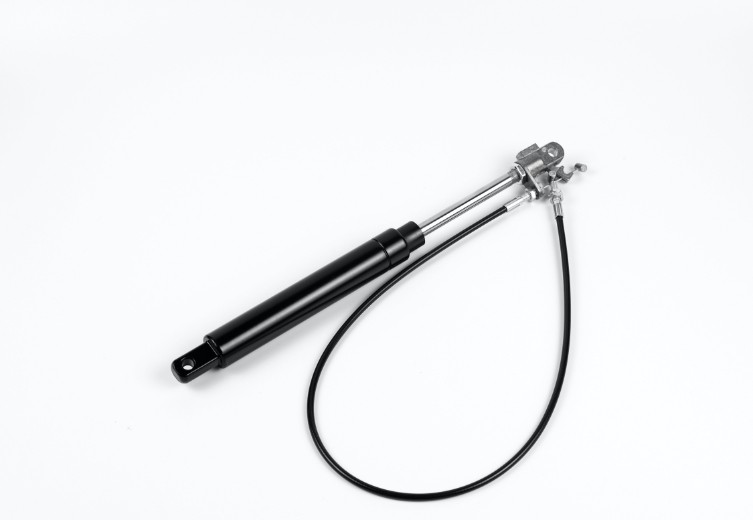
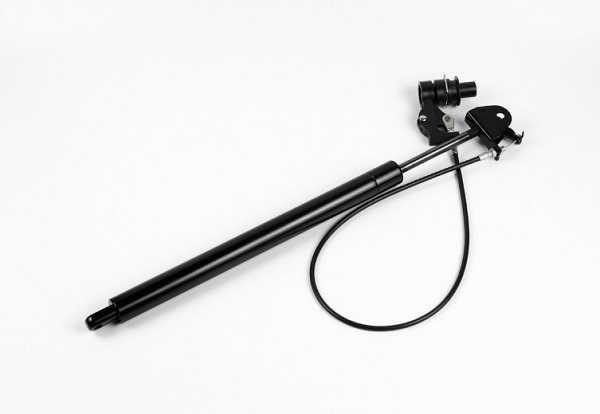
• External activation mechanism (lever, button, or automatic)
Operation Principle:The locking gas spring functions through controlled gas flow. When unlocked, compressed gas pushes against the piston, providing lifting force. The hydraulic oil dampens movement and ensures smooth operation. When the locking mechanism activates, it closes an internal valve that stops gas flow, effectively freezing the piston in its current position.
Locking Mechanisms:Different types of locking mechanisms serve various applications:
| Mechanism Type | Activation Method | Common Applications | Load Holding Capacity |
Manual Release | Lever or button | Office chairs, adjustable tables | Medium to high |
Automatic Lock | Position-based trigger | Automotive hoods, equipment covers | High |
Pneumatic Control | External air pressure | Industrial automation | Very high |
Cable Release | Remote cable operation | Difficult-to-reach locations | Medium |
Key Benefits
Locking gas springs provide several advantages over traditional positioning systems:
Precise Control: Users can position loads at any point along the stroke with millimeter accuracy. This precision eliminates the need for separate locking hardware or complex mechanical systems.
Safety Features: The locked position remains secure even if power fails or external forces are applied. This fail-safe characteristic protects both equipment and operators. Locking gas spring mechanisms provide reliable position holding in critical applications.
Smooth Operation: The gas-hydraulic system provides consistent force throughout the stroke, reducing effort required for positioning heavy loads.
Space Efficiency: Compact design replaces multiple components like springs, dampers, and separate locking mechanisms.
Components and Mechanism
Internal Components
The internal structure of a locking gas spring consists of several critical elements that work together to provide both lifting force and position control.
Pressure Chamber: Contains compressed nitrogen gas at pressures typically ranging from 10 to 180 bar, depending on the required force output. This gas provides the primary lifting force and energy storage for the system. Modern gas spring design principles emphasize proper pressure containment for optimal performance.
Piston Assembly: The piston divides the pressure chamber and incorporates the valve mechanism. High-quality seals prevent gas leakage while allowing smooth movement. The piston design affects both force characteristics and locking precision.
Hydraulic Oil System: Specialized oil provides lubrication and dampening. The oil's viscosity affects movement speed and smoothness. Some designs use metered orifices to control flow rates for consistent performance.
Valve Mechanism: The heart of the locking function, this component controls gas flow between chambers. When activated, it creates a hydraulic lock that prevents piston movement in both directions.
Locking Mechanism Types
Different locking mechanisms serve various application requirements:
Rigid Lock Systems: Provide absolute position holding through mechanical valve closure. These systems offer the highest holding forces but require deliberate activation to unlock.
Progressive Lock Systems: Allow gradual engagement and disengagement of the locking function. This design provides smoother operation for applications requiring frequent adjustments.
Bi-directional Locks: Prevent movement in both compression and extension directions. Most locking gas springs use this type for maximum position stability.
Single-direction Locks: Prevent movement in only one direction while allowing free movement in the other. These specialized designs serve specific applications like counterbalancing systems.
Force Characteristics
Understanding force characteristics helps in proper selection and application:
Extension Force: The force available when the gas spring extends. This force decreases slightly as the rod extends due to increasing internal volume.
Compression Force: The force required to compress the gas spring when unlocked. This force increases as the gas compresses.
Holding Force: The maximum load the locking mechanism can hold in the locked position. This typically exceeds the extension force significantly.
Activation Force: The force required to operate the locking mechanism. Design considerations balance easy operation with secure locking.
Applications and Benefits
Industrial Applications
Locking gas springs find extensive use in industrial equipment where precise positioning and load holding are essential:
Machine Guards and Covers: Equipment access panels benefit from locking gas springs that hold covers in convenient service positions. The locking feature prevents unexpected closure during maintenance, improving worker safety.
Adjustable Work Surfaces: Manufacturing workstations use locking gas springs to provide ergonomic height adjustment. Workers can position surfaces at optimal heights and lock them securely for extended use.
Tool Positioning Systems: Automated manufacturing equipment incorporates locking gas springs to position tools and fixtures precisely. The locking capability ensures repeatability in production processes.
Automotive Applications
The automotive industry relies heavily on locking gas springs for various applications:
Hood and Trunk Supports: Locking gas springs hold vehicle hoods and trunks in optimal positions for service access. The locking mechanism prevents unexpected closure, protecting both vehicles and technicians.
Seat Adjustment Systems: Advanced seating systems use locking gas springs for height and angle adjustment. The locking feature maintains position settings without continuous power consumption.
Convertible Top Mechanisms: Soft-top convertibles often incorporate locking gas springs in their folding mechanisms to maintain intermediate positions during operation.
Furniture and Ergonomic Applications
Modern furniture design increasingly incorporates locking gas springs for improved functionality:
Office Seating: Executive chairs and task seating use locking gas springs for height adjustment with infinite positioning capability. This provides superior comfort and ergonomic support compared to traditional pneumatic cylinders.
Adjustable Desks: Sit-stand desks benefit from locking gas springs that can hold intermediate positions safely. Users can position desks at any height within the adjustment range.
Medical Equipment: Hospital beds, examination tables, and patient chairs use locking gas springs for precise positioning with secure holding capability.
Performance Advantages
Locking gas springs provide significant performance benefits across applications:
Energy Efficiency: Unlike electric actuators, locking gas springs don't consume power to maintain position. The compressed gas stores energy efficiently, reducing operational costs.
Reliability: Fewer moving parts compared to mechanical systems result in higher reliability and reduced maintenance requirements. Proper sealing ensures consistent performance over extended periods.
Safety: The fail-safe locking mechanism prevents accidental movement even during power outages or system failures. This characteristic is crucial in safety-critical applications.
Versatility: Single components can replace multiple traditional elements like springs, dampers, locks, and actuators, simplifying system design and reducing assembly complexity.
Selection and Maintenance
Proper Selection Criteria
Selecting the right locking gas spring requires careful consideration of several factors:
Load Requirements: Calculate both static and dynamic loads the gas spring must handle. Include safety factors for variable loading conditions and potential overloads.
Stroke Length: Determine the required travel distance and ensure the gas spring stroke accommodates the full range of motion needed for the application.
Mounting Configuration: Consider mounting angles, connection types, and space constraints. Different mounting orientations affect force characteristics and performance.
Environmental Conditions: Temperature ranges, humidity levels, and exposure to chemicals or contaminants influence material selection and sealing requirements.
Activation Method: Choose between manual, automatic, or remote activation based on user accessibility and operational requirements.
| Selection Factor | Consideration | Impact on Performance |
Force Rating | Must exceed maximum load | Directly affects lifting capability |
Stroke Length | Matches required travel | Determines positioning range |
Operating Temperature | Environmental conditions | Affects gas pressure and seals |
Cycle Life | Expected usage frequency | Influences durability requirements |
Mounting Style | Installation constraints | Affects force direction and efficiency |
Installation Best Practices
Proper installation ensures optimal performance and longevity:
Mounting Alignment: Ensure mounting points align properly to prevent side loading. Misalignment can cause premature wear and reduced performance.
Connection Hardware: Use appropriate mounting hardware designed for the expected loads and environmental conditions. Proper connections prevent failure and ensure safety.
Protection Measures: Install protective boots or covers in contaminated environments to prevent damage to seals and exposed components.
Maintenance Guidelines
Regular maintenance maintains performance and extends service life:
Visual Inspections: Check for external damage, leakage, or corrosion regularly. Early detection prevents minor issues from becoming major problems.
Operational Testing: Periodically test locking mechanisms and force characteristics to ensure proper function. Document any changes in performance for trending analysis.
Environmental Protection: Keep components clean and protected from contaminants. Replace protective covers when damaged.
Professional Service: Schedule periodic professional inspection and service, especially for critical applications. Qualified technicians can perform internal maintenance and gas pressure adjustments when needed. Understanding gas spring applications helps ensure proper maintenance procedures.
When selecting locking gas spring components for demanding applications, working with an experienced lockable gas spring manufacturer ensures proper specification and reliable performance. Colewell provides comprehensive technical support to help engineers select the optimal solution for their specific requirements.
Conclusion
Locking gas springs represent a sophisticated solution for applications requiring both lifting assistance and precise position control. Their unique combination of pneumatic force and locking capability makes them invaluable in industries ranging from automotive to furniture manufacturing.
Understanding the internal mechanisms, force characteristics, and application requirements enables engineers to specify the most appropriate components for their needs. Proper selection, installation, and maintenance ensure these components provide reliable service throughout their operational life.
As technology continues advancing, locking gas springs will likely incorporate more sophisticated control systems and materials, further expanding their application possibilities while maintaining the fundamental advantages that make them essential components in modern mechanical systems.
FAQ
What is the difference between a locking gas spring and a regular gas spring?
A locking gas spring includes an internal valve mechanism that can stop and hold the piston at any position along its stroke, while a regular gas spring provides constant force without position control. The locking feature allows precise positioning and load holding without continuous external force.
How much weight can a locking gas spring hold in the locked position?
The holding capacity varies by design, but most locking gas springs can hold significantly more weight when locked than their rated extension force. Industrial models typically hold 2-3 times their extension force, with some specialized designs supporting even higher loads. Always consult manufacturer specifications for exact capacities.
Can locking gas springs be repaired if they lose pressure or the locking mechanism fails?
Most quality locking gas springs can be professionally serviced to restore pressure and repair locking mechanisms. However, repair feasibility depends on the extent of damage and component availability. In critical applications, replacement is often more cost-effective than repair.
What maintenance is required for locking gas springs?
Regular visual inspection for leaks, corrosion, and damage is essential. Keep mounting points clean and properly lubricated. Test the locking mechanism periodically to ensure proper operation. Professional servicing every 2-3 years or per manufacturer recommendations maintains optimal performance.
Are there safety concerns when using locking gas springs?
When properly installed and maintained, locking gas springs are very safe. Key safety considerations include using proper mounting hardware, avoiding side loading, and ensuring the locking mechanism functions correctly. Never attempt to disassemble pressurized components without proper training and equipment.