


 Sign in
 CN
CN

What is the Difference Between a Gas Spring and a Damper?
 Jan 26, 2026|
 View:80
Motion control components are essential in countless industrial and consumer applications, from automotive trunk lids to industrial machinery doors. Two components that often create confusion are gas springs and dampers. While they may appear similar in construction, these devices serve fundamentally different purposes in mechanical systems. Understanding these differences helps engineers, designers, and purchasers select the right component for their specific application, avoiding costly mistakes and ensuring optimal performance.
Key Takeaways
Gas springs provide active lifting force, while dampers only resist motion without generating force
Gas springs contain pressurized nitrogen (typically 300-2000 PSI), whereas dampers use hydraulic fluid at lower pressures
Dampers control speed in one or both directions, while gas springs support weight and assist movement
Selection criteria include load requirements, speed control needs, and environmental conditions
Proper application of each component enhances safety, user experience, and equipment longevity
Understanding Gas Springs: The Power Assistants
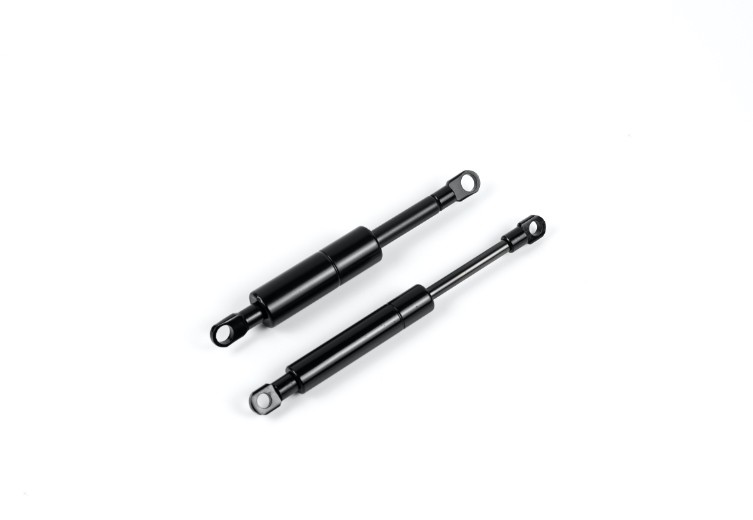
Gas springs, also known as gas struts or gas shocks, are self-contained hydro-pneumatic devices that generate force through compressed nitrogen gas. These components actively push or pull to assist movement, making heavy lids, doors, and hatches easy to operate with minimal user effort.
How Gas Springs Work
Inside a gas spring cylinder, pressurized nitrogen gas (typically ranging from 500 to 2000 PSI depending on the application) pushes against a piston connected to a rod. When the rod is compressed, the gas compresses slightly, but the pressure remains relatively constant throughout most of the stroke. This creates a consistent lifting force that counterbalances the weight of the component it supports.
The piston contains small orifices that allow a controlled amount of oil to pass through, providing damping characteristics during extension and compression. This hydraulic damping prevents sudden, jarring movements while still allowing the gas pressure to do the primary work of lifting or supporting loads. According to SAE International, a global standards organization for mobility engineering, properly designed gas springs maintain force consistency throughout their operating temperature range.
Common Applications of Gas Springs
Gas springs have become ubiquitous in modern life due to their reliability and convenience. In automotive applications, they support trunk lids, hatchbacks, and engine hoods, allowing these heavy components to open smoothly with minimal effort. The furniture industry extensively uses them in adjustable office chairs, providing height adjustment capabilities and supporting seat weight.
Industrial equipment relies on gas springs for machine guards, access panels, and ergonomic workstation components. Medical equipment manufacturers incorporate them into hospital beds, examination tables, and adjustable equipment platforms. The aerospace industry utilizes specialized gas springs for overhead compartments and service panels where weight savings and reliability are critical.
Understanding Dampers: The Speed Controllers
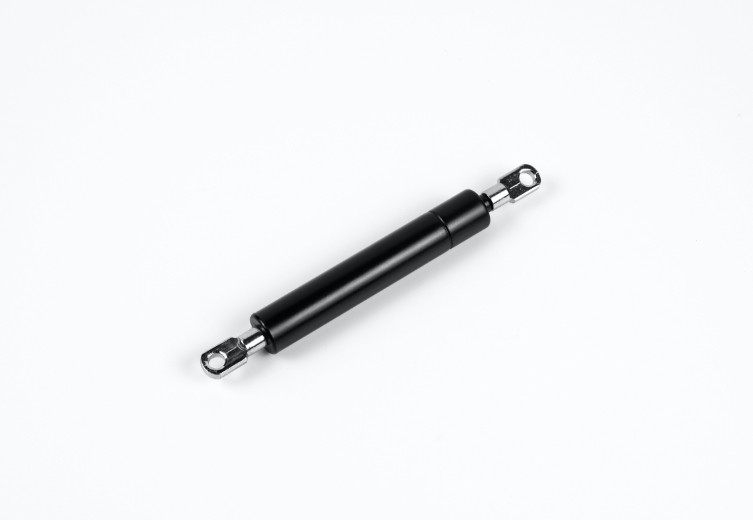
Dampers, also called hydraulic dampers or shock absorbers in some contexts, are devices designed exclusively to control the speed of movement. Unlike gas springs, dampers do not generate force to assist movement but instead provide resistance proportional to the velocity of motion.
How Dampers Function
A damper consists of a cylinder filled with hydraulic fluid (typically specialized oil) and a piston with precisely engineered orifices. As the piston moves through the fluid, the liquid must flow through these small passages, creating resistance. The faster the movement, the greater the resistance force generated. This velocity-dependent damping prevents items from slamming closed or dropping suddenly under their own weight.
Some dampers are unidirectional, providing resistance in only one direction (typically the closing direction), while bidirectional dampers control speed in both extension and compression. The damping characteristics can be tuned during manufacturing by adjusting orifice sizes, fluid viscosity, and piston design to match specific application requirements. Technical studies show that properly selected dampers can significantly reduce impact forces and extend equipment life.
Typical Damper Applications
Dampers excel in applications where controlled, gentle closure is desired. Kitchen cabinet and drawer manufacturers install soft-close dampers that catch doors and drawers just before they close, preventing slamming and reducing noise. This application has become standard in modern cabinetry, significantly extending hardware life and improving user experience.
Industrial machinery uses dampers to control access doors, inspection panels, and safety guards, ensuring they close at a safe, controlled speed regardless of how forcefully they are pushed. Automotive applications include glove box dampers, center console lids, and sunroof mechanisms. In commercial settings, dampers control automatic doors, preventing them from closing too quickly and posing safety hazards.
Key Differences Between Gas Springs and Dampers
| Characteristic | Gas Spring | Damper |
|---|---|---|
| Primary Function | Provides lifting/supporting force | Controls movement speed only |
| Force Generation | Active force from compressed nitrogen | Reactive force opposing motion |
| Internal Pressure | 500-2000 PSI (high pressure) | Atmospheric to 150 PSI (low pressure) |
| Force Behavior | Relatively constant throughout stroke | Proportional to movement velocity |
| Direction of Operation | Typically extension (pushing out) | Can be uni- or bidirectional |
| Mounting Requirement | Must support component weight | Supplementary to hinges or supports |
| Typical Stroke Length | 50-500mm (longer strokes common) | 10-100mm (shorter strokes typical) |
| Price Range | $8-$150 per unit | $3-$50 per unit |
Force Characteristics Comparison
The fundamental difference lies in how these components interact with loads. A gas spring actively pushes with a predetermined force, typically between 50 and 2000 Newtons depending on design. This force exists whether the component is moving or stationary, continuously supporting the attached load. The force gradually decreases slightly as the spring extends due to increasing gas volume, but remains within 15-20% of its rated force across the full stroke.
In contrast, a damper generates zero force when stationary. It only produces resistance when movement occurs, and this resistance increases with speed. A slowly closing lid encounters minimal damper resistance, while a rapidly moving component experiences significant opposition. This velocity-dependent behavior makes dampers ideal for speed control but useless for weight support.
Operational Lifespan and Maintenance
Both components are designed as sealed, maintenance-free units, but their longevity depends on application conditions. Gas springs typically endure 50,000 to 100,000 cycles under normal conditions, with premium models rated for 150,000 cycles or more. Performance degradation occurs gradually as seals wear and small amounts of nitrogen escape over time, reducing extension force.
Dampers often achieve longer cycle life, with quality units lasting 100,000 to 300,000 cycles because they operate at lower internal pressures and experience less stress. However, dampers are more sensitive to temperature extremes, as fluid viscosity changes affect damping performance. ISO 9001 quality management standards help manufacturers ensure consistent performance and reliability of motion control components throughout their service life.
Selecting the Right Component for Your Application
When to Choose a Gas Spring
Gas springs are the correct choice when applications require active force assistance. If a component is too heavy for comfortable manual operation, a properly sized gas spring makes it effortless to open while providing controlled closing speed through its internal damping. Automotive trunk lids exemplify this perfectly—the spring supports the lid's weight while allowing controlled closure.
Applications requiring the component to remain in the open position also benefit from gas springs. The constant extension force holds doors, lids, and panels open without latches or props. This proves particularly valuable in industrial settings where hands-free access to machinery is essential for maintenance and operation.
Consider gas springs when stroke length exceeds 150mm, as they efficiently handle long travel distances without loss of performance. Their sealed design also makes them suitable for harsh environments, including outdoor applications exposed to weather, dust, and temperature variations.
When to Choose a Damper
Dampers are ideal when the primary concern is controlling closure speed rather than providing weight support. Cabinet doors and drawers that are already balanced by hinges benefit from dampers that catch them in the last few centimeters of travel, preventing slamming. This application requires no lifting assistance, only speed control.
For lightweight applications where gentle, controlled movement enhances user experience and reduces wear, dampers provide cost-effective solutions. They excel in consumer products where noise reduction is important, such as appliance doors, electronics enclosures, and automotive interior components.
Choose dampers when bidirectional speed control is needed, as specialized versions control movement in both directions. This proves valuable for hinged components that need controlled opening and closing speeds, such as laptop screens or adjustable equipment panels.
Hybrid Solutions and Combined Systems
Some applications benefit from using both components together. Heavy industrial doors might use gas springs to counterbalance weight and provide lifting assistance, while adding dampers to control the final closing speed more precisely. This combination ensures the door opens easily, remains open without support, and closes gently without slamming.
In automotive applications, lift gates sometimes incorporate gas springs for weight support and separate dampers for fine-tuned closing control. This dual approach provides optimal user experience by balancing ease of operation with controlled, safe closure. The investment in both components pays dividends through reduced warranty claims and enhanced customer satisfaction.
Technical Specifications and Sizing Considerations
Calculating Required Gas Spring Force
Proper gas spring sizing requires calculating the force needed to counterbalance the component's weight and overcome friction forces. Engineers use the formula: F = (W × L1) / (L2 × cosθ), where F is the required gas spring force, W is the component weight, L1 is the distance from hinge to center of gravity, L2 is the distance from hinge to gas spring mounting point, and θ is the mounting angle.
Most applications use two gas springs for stability, so the calculated force is divided between them. Safety factors typically range from 1.1 to 1.3, meaning the selected spring force exceeds calculated requirements by 10-30% to account for friction, seal wear over time, and environmental factors. Manufacturers provide selection software and engineering support to ensure proper sizing.
Determining Appropriate Damper Characteristics
Damper selection focuses on achieving the desired closing time rather than counterbalancing weight. The key parameters include stroke length, damping force at a reference velocity (typically measured at 50mm/second), and whether unidirectional or bidirectional damping is required.
Engineers specify closing time requirements—for example, a cabinet door should take 2-3 seconds to close the final 50mm of travel. Damper manufacturers provide performance curves showing force versus velocity characteristics, allowing designers to select units that deliver the desired closing behavior. Testing prototypes confirms that the selected damper provides appropriate feel and performance across expected operating conditions.
Installation Best Practices and Common Mistakes
Proper Mounting Techniques
Both gas springs and dampers require correct mounting geometry to function properly and achieve rated service life. Gas springs should be installed with the piston rod facing downward whenever possible, as this orientation ensures internal lubrication reaches the seals. When downward mounting is impossible, premium models with special seal designs accommodate alternative orientations.
Mounting brackets must allow for the angular changes that occur throughout the stroke. Using spherical bearings or ball joints at both ends prevents side loading, which accelerates wear and can cause premature failure. Rigid mounting causes the rod to bend during operation, damaging seals and reducing cycle life dramatically.
Dampers are less sensitive to orientation but still require free angular movement at mounting points. Over-tightening mounting bolts restricts this movement, causing binding and uneven wear. Manufacturers specify torque values for mounting hardware that ensure secure attachment without restricting necessary movement.
Common Installation Errors to Avoid
The most frequent mistake involves incorrect mounting geometry that creates side loads or bending moments. Gas springs and dampers are designed to handle axial forces only—any perpendicular force dramatically reduces service life. Using mounting brackets that maintain proper angular alignment throughout the operating range prevents this issue.
Another common error is exceeding maximum extension length. Gas springs lose force as they extend beyond their designed stroke length, and over-extension can damage internal components. Similarly, compressing them beyond their minimum length creates excessive internal pressure that can cause seal failure. Always verify that the application's movement range matches the component's specified stroke.
Environmental contamination shortens component life. Although gas springs and dampers are sealed units, contamination can damage external rod surfaces, which then carry debris past seals during operation. In dusty or corrosive environments, selecting components with protective boots or corrosion-resistant coatings extends service life significantly.
Industry Standards and Quality Considerations
Regulatory Compliance and Testing
Quality gas springs and dampers undergo rigorous testing to meet industry standards. Reputable manufacturers comply with international quality standards and conduct comprehensive testing protocols that verify force consistency, cycle life, temperature performance, and seal integrity. Premium manufacturers conduct accelerated life testing that simulates years of operation within weeks, identifying potential failure modes before products reach the market. Certification documentation provides assurance that components will perform as specified throughout their expected service life.
Quality Indicators When Selecting Suppliers
Reputable manufacturers provide comprehensive technical data including force curves, dimensional drawings, and material specifications. They offer engineering support for application-specific challenges and maintain quality certifications from recognized standards organizations. Look for suppliers with established track records in your specific industry, as application expertise proves invaluable during the selection process.
Price alone should not drive purchasing decisions. Low-quality components may cost 30-50% less initially but often fail prematurely, creating warranty claims, customer dissatisfaction, and replacement costs that far exceed any initial savings. Components from established manufacturers with proven quality systems provide better total cost of ownership despite higher purchase prices.
Environmental and Safety Considerations
Temperature Effects on Performance
Both gas springs and dampers experience performance changes across temperature ranges. Gas springs typically operate effectively from -22°F to +176°F (-30°C to +80°C), with force output varying approximately 3% per 18°F (10°C) temperature change. This occurs because gas pressure increases with temperature according to the ideal gas law. Applications in extreme temperature environments require special consideration during the selection process.
Damper performance is more temperature-sensitive due to hydraulic fluid viscosity changes. Cold temperatures thicken the fluid, increasing damping force and potentially creating overly slow movement. High temperatures thin the fluid, reducing damping effectiveness. Premium dampers use specially formulated fluids with improved viscosity stability across broader temperature ranges, typically from 40°F to 150°F (4°C to 66°C) for optimal performance.
Safety Features and Failure Modes
Quality gas springs incorporate end-of-stroke damping that gradually slows the rod as it approaches full extension, preventing harsh impacts. Some applications require lockable gas springs with pins or cables that can hold the component in the open position for safety during maintenance operations.
In the rare event of seal failure, gas springs gradually lose pressure over days or weeks rather than failing catastrophically. This allows time for detection and replacement before complete failure occurs. Dampers typically fail by losing fluid, which results in loss of damping control but does not create safety hazards. Both components are designed with failure modes that default to safe states rather than creating dangerous situations.
Conclusion
Understanding the fundamental differences between gas springs and dampers enables better component selection and optimal system performance. Gas springs actively generate force to assist movement and support weight, making heavy components easy to operate while providing controlled motion through internal damping. Dampers exclusively control movement speed through velocity-dependent resistance without generating lifting force.
The choice between these components depends on application requirements. Gas springs suit applications needing weight support, lifting assistance, and maintaining open positions. Dampers excel when controlling closure speed, preventing slamming, and enhancing user experience through gentle, controlled movement. Many applications benefit from using both components together to achieve optimal performance.
Proper selection, sizing, and installation ensure these components deliver reliable performance throughout their service life. Working with experienced manufacturers who provide engineering support and quality-certified products leads to successful implementations that enhance product functionality, user satisfaction, and overall system reliability. Whether designing new equipment or improving existing products, understanding gas spring and damper capabilities allows engineers to create better solutions that meet user needs while ensuring safety and durability.


