


 Sign in
 CN
CN

Simple & Safe: Your Complete Guide to Installing Gas Springs Like a Pro
 Jul 01, 2025|
 View:260
Installing a gas spring doesn't require professional expertise or specialized tools. Whether you're upgrading cabinet doors, trunk lids, or office chairs, understanding the proper installation process ensures optimal performance and safety. This comprehensive guide walks you through every step of gas spring installation, from preparation to final testing, helping you complete the job confidently and correctly.
Key Takeaways
Gas springs should always be installed with the piston rod pointing downward for maximum lifespan
Proper mounting bracket selection prevents 80% of installation failures
Force calculation is critical—incorrect force ratings cause premature wear or malfunction
Installation typically takes 15-30 minutes per gas spring with basic tools
Annual inspection and lubrication extend gas spring life by up to 40%
Understanding Gas Spring Basics Before Installation
Before diving into installation, it's essential to understand what a gas spring is and how it functions. A gas spring is a type of spring that uses compressed gas contained within a sealed cylinder to exert force. Unlike traditional coil springs, gas springs provide smooth, controlled motion and can support significant weight while maintaining compact dimensions.
The basic components include a pressure tube (cylinder), piston rod, piston with seal, and compressed nitrogen gas. When compressed, the gas spring absorbs energy; when released, it extends smoothly. This mechanism makes them ideal for applications requiring assisted lifting, controlled closing, or position holding.
According to National Institute of Standards and Technology guidelines, proper installation orientation directly affects performance and longevity, making installation knowledge crucial for optimal results.
Essential Tools and Materials Needed
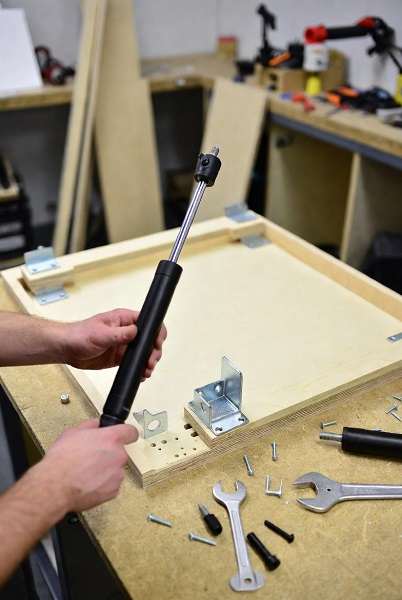
Gathering the right tools before starting prevents mid-installation delays and ensures proper fitting. Most gas spring installations require only basic household tools, making this a feasible DIY project for most people.
Required Tools
Socket wrench set or adjustable wrench
Screwdriver set (Phillips and flathead)
Drill with appropriate drill bits (if new mounting holes needed)
Measuring tape or ruler
Level (for precise alignment)
Protective gloves and safety glasses
Marker or pencil for marking positions
Materials Checklist
Gas spring units (sized appropriately for your application)
Mounting brackets (often included with gas springs)
Fasteners (bolts, nuts, washers as specified)
Lock washers or thread-locking compound
Silicone lubricant (for maintenance)
Step 1: Calculate the Correct Gas Spring Force
Selecting the proper force rating is the most critical step in gas spring installation. Too little force means the lid or door won't stay open; too much force makes closing difficult or impossible.
The force calculation depends on several factors: the weight of the lid or door, the distance from the hinge to the mounting point, and the desired opening angle. A simplified formula for horizontal lid applications is:
Force per spring (N) = (Mass in kg × 9.8 × Distance A) / (Distance B × Number of springs × cos(angle))
Where:
Distance A = Distance from hinge to center of gravity
Distance B = Distance from hinge to gas spring mounting point
Angle = Opening angle of the lid
For example, lifting a 20 kg lid with center of gravity 400 mm from the hinge, mounting two gas springs 600 mm from the hinge at 90 degrees: (20 × 9.8 × 400) / (600 × 2 × 1) = approximately 65 N per gas spring.
| Application Type | Typical Force Range | Common Uses |
|---|---|---|
| Light Duty | 50-200 N | Cabinet doors, small toolboxes |
| Medium Duty | 200-600 N | Car trunk lids, storage chests |
| Heavy Duty | 600-1500 N | Industrial equipment, heavy lids |
| Extra Heavy Duty | 1500+ N | Machinery covers, large hatches |
For complex applications with multiple angles or varying loads, professional installers recommend using manufacturer-provided calculation tools or consulting with technical support to ensure accuracy.
Step 2: Determine Optimal Mounting Positions
Proper mounting position affects both performance and longevity. The mounting points should be carefully calculated based on the application geometry and desired motion.
Key Positioning Principles
Distance from Hinge: Mount the gas spring as far from the hinge as practical. Greater distance reduces the required force and improves mechanical advantage. Typical installations place the mounting point at 70-85% of the total lid length from the hinge.
Angle Considerations: At the closed position, the gas spring should form an angle between 25-45 degrees with the mounting surface. At full extension, avoid angles exceeding 20 degrees from the ideal working angle to prevent side-loading, which reduces lifespan significantly.
Piston Rod Orientation: Always install with the piston rod pointing downward when possible. This orientation keeps the internal seals lubricated and extends service life by 30-50% compared to inverted installations. According to OSHA safety guidelines, proper orientation also reduces failure risks in industrial applications.
Clearance Check: Ensure adequate clearance throughout the entire range of motion. The gas spring should never contact other components or reach its mechanical stop too early. Minimum clearance of 10-15 mm is recommended for safe operation.
Step 3: Prepare Mounting Points
Proper preparation of mounting surfaces ensures secure attachment and prevents future loosening or failure.
For Existing Holes: Clean the mounting area thoroughly, removing any rust, paint, or debris. Inspect existing holes for damage or elongation that might compromise security. If holes are worn, consider relocating mounting points or using larger fasteners with reinforcement plates.
For New Installations: Mark the mounting positions carefully using measurements from your calculations. Double-check all measurements before drilling. Use a center punch to prevent drill bit wandering. Select drill bit size according to fastener specifications—typically 0.5-1 mm larger than the bolt diameter for clearance holes.
When drilling into metal, use cutting fluid to prevent overheating and extend bit life. For wood applications, drill pilot holes to prevent splitting. If mounting to thin materials (less than 3 mm), use backing plates to distribute load and prevent pull-through.
Step 4: Attach Mounting Brackets
Mounting brackets serve as the connection interface between the gas spring and your application. Most gas springs use ball socket or eye-end fittings that attach to corresponding brackets.
Bracket Types: Common bracket styles include fixed ball sockets, adjustable ball sockets, and clevis mounts. Select brackets that match your gas spring end fittings and provide necessary articulation for smooth operation.
Installation Process:
Position the bracket at the marked location, ensuring proper orientation
Insert fasteners through bracket holes into prepared mounting holes
Add lock washers to prevent loosening from vibration
Hand-tighten all fasteners initially
Verify alignment before final tightening
Tighten fasteners to appropriate torque (typically 8-12 Nm for M6 bolts, 15-20 Nm for M8 bolts, 25-35 Nm for M10 bolts)
For critical applications, apply thread-locking compound to fasteners to prevent loosening over time. Avoid over-tightening, which can strip threads or deform brackets.
Step 5: Install the Gas Spring
With brackets securely mounted, you're ready to attach the gas spring itself. This step requires care to avoid damaging the piston rod or internal seals.
Safety First: Wear protective gloves and safety glasses. Gas springs store significant energy and can extend forcefully if mishandled. Never point the rod end toward yourself or others during installation.
Installation Sequence
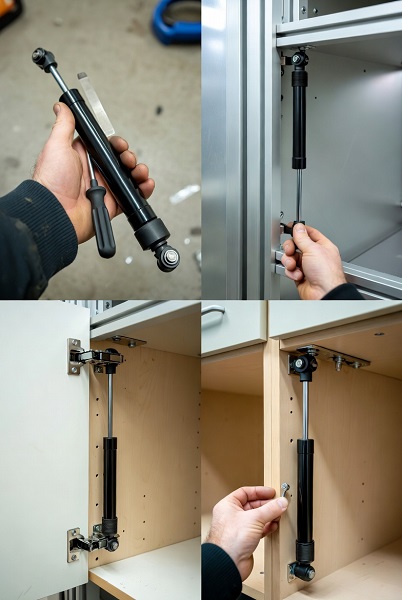
Attach Lower Mount First: Connect the cylinder end (body) to the lower mounting bracket. For ball socket connections, compress the spring slightly to align the ball with the socket, then snap into place. For clevis connections, insert the pin and secure with retaining clip.
Compress or Extend as Needed: Manually compress or extend the gas spring to reach the upper mounting point. You may need an assistant to hold the lid or door in position while connecting.
Attach Upper Mount: Connect the piston rod end to the upper bracket using the same method as the lower connection. Ensure the connection fully engages and locks securely.
Verify Connections: Tug firmly on the gas spring to confirm both connections are secure. Check that ball sockets have fully snapped into position and retaining clips are properly seated.
Test Movement: Slowly open and close the lid or door through its full range of motion, checking for smooth operation and adequate support.
Important Note: Never use pliers, wrenches, or tools directly on the piston rod surface, as this can damage the chrome plating and cause seal failure. If force is needed, apply it to the cylinder body or mounting fittings only.
Step 6: Test and Adjust Installation
Thorough testing ensures safe, reliable operation and identifies any issues requiring adjustment before regular use.
Testing Checklist
Opening Performance: The lid should open smoothly without jerking or sudden movements. It should reach and hold at the desired open position without dropping or requiring additional support.
Closing Function: Closing should require moderate, consistent pressure. If excessive force is needed, the gas spring may be over-rated. If the lid slams shut, it's under-rated.
Range of Motion: Verify the gas spring doesn't reach full extension or compression before the lid reaches its intended position. Premature bottoming-out causes stress and premature failure.
Alignment Check: Observe the gas spring throughout operation. It should move smoothly without binding, twisting, or side-loading. Misalignment appears as visible bending or angular stress on the rod.
Noise Assessment: Properly installed gas springs operate quietly. Hissing sounds indicate seal damage or gas leakage requiring immediate replacement.
Hold Test: Leave the lid in various open positions for several minutes. It should maintain position without sagging, indicating proper force rating and seal integrity.
| Issue Observed | Likely Cause | Solution |
|---|---|---|
| Lid won't stay open | Insufficient force rating | Replace with higher force gas spring |
| Difficult to close | Excessive force rating | Replace with lower force gas spring |
| Binding or sticking | Misalignment or side-loading | Adjust mounting positions |
| Hissing sound | Gas leakage from damaged seal | Replace gas spring immediately |
| Gradual position loss | Slow gas leak or seal wear | Schedule replacement soon |
Common Installation Mistakes to Avoid
Learning from common errors helps ensure successful installation on your first attempt.
Incorrect Force Calculation: This is the number one installation mistake. Many installers underestimate the force needed, especially for heavy or large lids. Always calculate based on actual measurements rather than guessing. When in doubt, consult force calculation tools or manufacturer guidelines.
Improper Orientation: Installing gas springs with piston rods pointing upward significantly reduces lifespan. The internal lubricant drains away from seals, causing premature wear. Industry testing shows inverted installation can reduce service life by 30-50% or more.
Excessive Side-Loading: Mounting at incorrect angles causes the piston rod to bend slightly during operation, accelerating wear on seals and bushings. Maintain angles within manufacturer specifications throughout the entire range of motion.
Inadequate Fastening: Loose mounting brackets allow movement that causes wear and eventual failure. Always use lock washers or thread-locking compound, and torque fasteners to specification.
Ignoring Clearance: Failing to verify clearance throughout the full range can cause the gas spring to contact other components, leading to damage or restricted motion.
Maintenance Tips for Long-Lasting Performance
Proper maintenance extends gas spring life and ensures continued reliable operation.
Regular Cleaning: Wipe the exposed piston rod with a clean, lint-free cloth monthly to remove dust, dirt, and corrosive materials. Contaminants on the rod get pulled into the seal during compression, causing premature wear.
Lubrication: Apply a thin film of silicone-based lubricant to the piston rod every 3-6 months. Avoid petroleum-based lubricants which can damage seals. Simply extend the gas spring fully, apply lubricant, then cycle it several times to distribute the lubricant.
Inspection Schedule: Check mounting hardware quarterly, tightening any loose fasteners. Inspect the piston rod surface for scratches, corrosion, or pitting—any damage compromises seal integrity. Check for oil residue around the seal, indicating early seal failure.
Environmental Protection: In outdoor or corrosive environments, consider protective boots that cover the piston rod when compressed. This prevents contaminant entry and extends service life significantly.
Replacement Indicators: Replace gas springs when you notice reduced force (lid won't stay open as well), oil leakage, hissing sounds, or visible damage to the piston rod or cylinder. Don't wait for complete failure, which can cause sudden lid drops and potential injury.
Special Considerations for Different Applications
Automotive Applications
Vehicle trunk lids and hatchbacks require gas springs rated for temperature extremes (-30°C to +80°C). Consider stainless steel models for coastal areas where salt exposure accelerates corrosion. Ensure mounting brackets are rated for vehicle vibration—automotive-grade hardware prevents loosening from road shock.
Furniture and Cabinetry
Kitchen cabinet gas springs typically use soft-close features for quiet operation. Mounting in tight spaces requires compact gas spring models with shorter stroke lengths. For glass-fronted cabinets, use lower force ratings to prevent sudden movements that might crack glass.
Industrial Equipment
Heavy machinery covers often require multiple gas springs working in parallel. Distribute mounting points evenly to prevent twisting. Consider lockable gas springs for safety-critical applications where the lid must remain securely open during maintenance. Industrial environments may require specialized seals resistant to chemicals, oils, or extreme temperatures. Reference NFPA safety standards for proper installation in industrial settings.
Marine Applications
Marine environments demand stainless steel construction with enhanced corrosion resistance. Consider sealed end fittings to prevent salt water intrusion. Inspect more frequently (monthly) due to harsh conditions, and apply marine-grade lubricants specifically designed for saltwater exposure.
Conclusion
Installing a gas spring successfully combines accurate force calculation, proper positioning, careful mounting, and thorough testing. By following this comprehensive guide, even first-time installers can achieve professional results that provide years of reliable service.
Remember the key principles: calculate force accurately, mount with piston rod downward when possible, avoid side-loading through proper angle selection, secure all fasteners properly, and test thoroughly before regular use. Regular maintenance, including cleaning and lubrication, extends service life significantly and ensures continued safe operation.
Whether upgrading cabinet doors, replacing worn automotive gas springs, or installing new equipment, the installation process remains fundamentally the same. With the proper approach, tools, and understanding, gas spring installation becomes a straightforward project that dramatically improves functionality and user experience in countless applications.
Frequently Asked Questions
How long does gas spring installation typically take?
Most installations take 15-30 minutes per gas spring with basic tools. Complex applications requiring new mounting holes or bracket fabrication may take 45-60 minutes.
Can I install a gas spring upside down?
While physically possible, inverted installation (piston rod pointing up) reduces lifespan by 30-50%. The internal lubricant drains away from seals, causing premature wear. Always install rod-down when possible.
What happens if I choose the wrong force rating?
Insufficient force means the lid won't stay open properly; excessive force makes closing difficult and may cause premature wear. Always calculate force based on actual weight and geometry measurements.
How often should gas springs be replaced?
Typical service life ranges from 25,000 to 60,000 cycles or 3-10 years depending on application, load, and maintenance. Replace when force decreases noticeably, oil leakage appears, or damage occurs to the piston rod.
Can I repair a leaking gas spring?
No, gas springs are sealed units that cannot be repaired. Once seals fail or gas escapes, replacement is the only option. Attempting repairs is unsafe due to internal pressure.
Do I need special tools for installation?
Most installations require only common hand tools: wrenches, screwdrivers, and measuring tape. A drill may be needed for new mounting holes. No specialized equipment is necessary for standard applications.
Why does my gas spring make a hissing sound?
Hissing indicates gas leakage from damaged seals or a punctured cylinder. This requires immediate replacement as the gas spring will soon lose all pressure and fail completely.
Can I use one large gas spring instead of two smaller ones?
For wide lids or doors, two gas springs provide better balance and prevent twisting. One centered gas spring may work for narrow applications, but dual installation is generally more reliable and provides smoother operation.


