


 Sign in
 CN
CN

Understanding Gas Struts: A Comprehensive Guide to Different Force Ratings
 Jan 08, 2026|
 View:31
Gas struts have become essential components across industries from automotive to furniture, aerospace to medical equipment. These precision devices provide controlled motion, reliable support, and smooth operation where traditional springs fall short. Understanding different force ratings enables proper selection for optimal performance and safety.
Key Takeaways
Gas struts range from 50N to 1500N, each suited for specific weight and application requirements
Light-duty struts (50N-200N) serve compact applications like cabinets and laptop stands
Medium-duty struts (250N-400N) handle vehicle hoods, access panels, and furniture
Heavy-duty struts (600N-1000N) support large tailgates and industrial equipment
Extra heavy-duty struts (1500N) accommodate construction machinery and aerospace components
Proper force rating selection prevents equipment damage and ensures smooth operation
Mounting angle, stroke length, and environmental conditions significantly impact performance
What Are Gas Struts and How Do They Work?
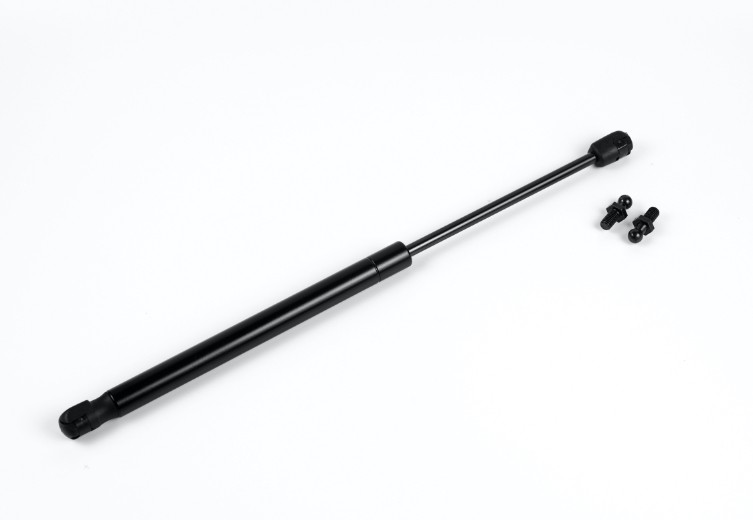
Gas struts, also known as gas springs, consist of a sealed cylinder filled with compressed nitrogen gas and a piston rod that moves smoothly through the cylinder. The compressed gas creates consistent force that pushes the piston rod outward, providing controlled lifting and damping motion. Unlike mechanical springs, gas struts deliver linear force throughout their stroke, ensuring predictable operation.
Internal construction includes precision-machined components, high-quality seals, and calibrated gas pressure. The piston rod features polished chrome plating that resists corrosion while sliding smoothly through seals. Inside, a piston with designed orifices controls gas flow, creating damping that prevents sudden movements. Nitrogen is used as the pressurized gas because it is inert, non-flammable, and stable across varying temperatures.
Understanding Force Ratings
Force rating, measured in Newtons (N), represents the pushing force the gas strut exerts when compressed. This specification forms the most critical parameter for selection. The rating directly determines weight capacity and lifting capability.
Calculating required force involves panel weight, mounting distance from the hinge, and installation angle. As a general guideline, total strut force should equal approximately 60-80% of panel weight when mounted at 45 degrees. Mounting closer to vertical requires higher force ratings, while mounting closer to horizontal allows lower ratings. Understanding mechanical force principles helps optimize gas strut selection for specific applications.
Key Technical Parameters
Stroke length defines total extension distance from fully compressed to fully extended, typically ranging from 50mm to 800mm. Rod diameter affects both force capacity and durability, commonly ranging from 6mm to 14mm for standard applications. Common size specifications include 6-15 (6mm rod, 15mm tube), 8-18, 10-23, and 14-28 configurations.
| Force Category | Force Range | Typical Rod Size | Common Applications |
|---|---|---|---|
| Light-Duty | 50N-200N | 6mm | Small cabinets, laptop stands, lightweight lids |
| Medium-Duty | 250N-400N | 8mm | Vehicle hoods, furniture, access panels |
| Heavy-Duty | 600N-1000N | 10-12mm | Truck tailgates, industrial equipment, medical beds |
| Extra Heavy-Duty | 1500N | 14mm | Construction equipment, large storage containers |
Light-Duty Gas Struts: 50N to 200N Applications
Light-duty gas struts serve applications involving lightweight components and compact spaces. These struts excel in consumer products, office equipment, and small-scale furniture.
50N and 80N Gas Struts
These ultra-light force ratings support laptop stands, small toolbox lids, jewelry box covers, and compact storage compartments. The 50N to 80N range provides gentle lifting that prevents damage to delicate mechanisms while offering controlled motion. Typical applications include document holders, small equipment enclosures, and lightweight access panels where cylinder diameters of 15mm and 6mm rod diameters fit space constraints.
100N, 150N, and 200N Gas Struts
Moving to 100N-200N expands possibilities to kitchen upper cabinets with lift-up doors, storage boxes, and lightweight furniture. These ratings provide sufficient support for doors and lids weighing 3-8 kilograms depending on mounting configuration. In recreational vehicles and marine applications, these struts support overhead storage compartments, small access hatches, and equipment covers. The moderate force allows easy manual operation while preventing sudden closure.
Medium-Duty Gas Struts: 250N to 400N Applications
Medium-duty gas struts represent the most commonly specified force range across diverse industries, handling automotive components, industrial equipment, and furniture manufacturing.
250N and 300N Gas Struts
The 250N-300N range dominates automotive hood and trunk applications for mid-size vehicles. These struts lift hoods weighing 12-20 kilograms while maintaining controlled motion. In furniture manufacturing, these support lift-top coffee tables, storage benches, and ottoman storage compartments. The force capacity suits panels measuring 800-1200mm in length. Industrial applications include access panels on machinery and equipment enclosures requiring frequent opening for maintenance.
350N and 400N Gas Struts
As force increases to 350N-400N, applications expand to heavier furniture and demanding industrial uses. These struts commonly support large sofa beds, storage benches with thick lids, and commercial cabinetry. Automotive applications include larger vehicle hoods, SUV rear hatches, and van door assist systems. Industrial machinery employs these for equipment guards, inspection doors, and maintenance access panels. Food processing equipment and packaging machinery frequently incorporate struts in this range for operator access panels.
Heavy-Duty Gas Struts: 600N to 1000N Applications
Heavy-duty gas struts handle substantial loads while maintaining smooth, controlled motion essential for safe operation in demanding applications.
600N Gas Struts
The 600N rating accommodates large vehicle tailgates, heavy equipment covers, and substantial industrial access panels. Pickup truck tonneau covers, commercial van rear doors, and utility vehicle tailgates commonly specify 600N struts for panels weighing 35-45 kilograms. The increased rod diameter, typically 10mm, provides structural strength to resist side loading. Medical equipment utilizes 600N struts for adjustable examination tables and patient transfer devices.
800N and 1000N Gas Struts
Force ratings of 800N-1000N serve the most demanding standard applications. Heavy commercial vehicle tailgates, large industrial equipment covers, and substantial access panels require this capacity. Construction equipment, agricultural machinery, and heavy trucks specify these struts for operator cab doors and engine compartment covers. In medical facilities, these support advanced hospital beds with heavy mattress systems and surgical tables. Industrial material handling equipment employs these for large storage container lids and bulk material hopper covers.
Extra Heavy-Duty: 1500N Gas Struts
The 1500N force rating represents specialized territory for the most demanding applications. These exceptionally robust struts handle extreme loads in construction equipment, aerospace components, and large-scale industrial machinery. The substantial 14mm rod diameter combined with heavy-duty cylinder construction provides structural integrity for demanding conditions.
Construction equipment relies on 1500N struts for large access panels on excavators and bulldozers, supporting panels weighing 80 kilograms or more while withstanding vibration and shock loads. Large industrial storage containers, bulk material silos, and process equipment specify these for massive covers where reliability under extreme conditions proves essential.
Critical Selection and Installation Factors
Mounting Position and Angle
Mounting angle dramatically affects required force ratings. Gas struts perform most efficiently when installed at angles between 35-55 degrees from vertical in closed position. Distance from the pivot point creates leverage effects—mounting closer to the hinge requires higher force ratings. Doubling the distance from the hinge allows halving the required force, though space constraints often limit mounting options.
Environmental Considerations
Operating temperature significantly impacts performance. Standard gas struts function reliably from -30°C to +80°C, sufficient for most applications. Gas pressure increases with temperature, raising effective force, while decreasing temperature reduces force output. Exposure to corrosive environments requires protective treatments beyond standard chrome plating. Stainless steel construction or specialized coatings shield struts from environmental damage in marine environments, chemical facilities, and harsh climates.
Proper Installation
Gas struts must always be installed with the rod end pointing downward when the supported panel is closed. This orientation keeps internal lubrication properly distributed and prevents contaminants from entering seals. Installing upside down dramatically reduces service life. End fittings must allow free rotation during the full operating cycle. Binding creates side loading that accelerates wear and causes premature failure.
Quality and Service Life
Manufacturing quality significantly impacts reliability and longevity. Premium gas struts employ high-grade cold-drawn seamless steel tubing for cylinders and precision-ground, hard-chrome plated steel for piston rods. Multi-lip seals using premium elastomer compounds maintain gas pressure through millions of cycles.
Quality gas struts typically deliver 40,000 to 50,000 cycles under normal operating conditions with maximum 10% force loss, translating to many years of reliable service. Some manufacturers test their struts to over 200,000 cycles under ideal conditions. Actual service life depends on operating conditions, installation quality, and adherence to specifications.
Gas struts require minimal maintenance beyond keeping the exposed rod clean. Regular inspection should verify smooth operation, absence of leakage, and proper mounting security. Unlike mechanical springs, gas struts cannot be repaired once seals fail—replacement becomes necessary when performance degrades.
Benefits of Proper Implementation
Correctly specified gas struts deliver multiple benefits. They eliminate sudden closure hazards that could cause injury, with controlled damping preventing panels from slamming shut. The smooth operation enhances user satisfaction and perceived product quality.
By supporting panel weight throughout the operating cycle, gas struts dramatically reduce stress on hinges and mounting hardware, extending service life while preventing loosening of fasteners. The controlled motion prevents flexing that contributes to rust development and structural fatigue. Equipment manufacturers benefit from reduced warranty claims and enhanced customer satisfaction.
Gas struts enable design solutions impossible with traditional springs. The linear force profile and compact envelope allow innovative products with improved aesthetics and functionality. In industrial equipment, struts facilitate ergonomic access while maintaining protective enclosures during operation.
Conclusion
Understanding gas strut force ratings empowers proper selection that optimizes performance, safety, and longevity. The comprehensive range from 50N to 1500N provides solutions for virtually any lifting or controlled motion requirement across residential, commercial, and industrial applications.
Successful implementation requires consideration of mounting position, environmental conditions, and quality standards. Investing in properly engineered solutions with quality components delivers benefits that far exceed incremental cost differences. As manufacturing capabilities advance, users gain access to reliable gas struts at competitive prices. The key lies in identifying reputable manufacturers with documented quality systems and proven track records.
Frequently Asked Questions
What does the force rating (N) mean on a gas strut?
The force rating in Newtons indicates the pushing force the strut exerts when compressed. For example, a 300N strut provides 300 Newtons of force, roughly supporting 30 kilograms at a 90-degree angle.
How do I calculate the correct force rating?
Consider panel weight, mounting distance from hinge, and installation angle. Generally, total strut force should equal 60-80% of panel weight for struts mounted at 45 degrees. Mounting closer to vertical requires higher force ratings.
Can gas struts be installed in any orientation?
No. Gas struts must be installed with the rod end pointing downward in the closed position to maintain proper lubrication and prevent contamination. Incorrect installation significantly reduces service life.
What is the typical lifespan of a gas strut?
Quality gas struts typically provide 40,000 to 50,000 cycles with maximum 10% force loss under normal conditions, equivalent to 10-15 years in residential use or 5-10 years in commercial applications with daily operation.
Why do gas struts fail?
Common causes include seal deterioration from contaminants, incorrect installation orientation, side loading from restricted mounting, and operation beyond specified temperature ranges. Keep rods clean and ensure proper mounting with free rotation.
Do gas struts require maintenance?
Minimal maintenance is required. Periodically clean the exposed rod, inspect mounting hardware, and verify smooth operation. Gas struts cannot be repaired—replacement is necessary when performance degrades.
Can I use a higher force rating than calculated?
Using excessive force makes panels difficult to close and creates stress on mounting hardware. Slight over-rating (10-15%) provides safety margin, but significantly higher forces create problems.
How do temperature extremes affect performance?
Gas pressure increases with temperature, raising force output, while cold reduces pressure and force. Standard struts operate reliably from -30°C to +80°C. Applications with extreme temperatures may require specialized struts.


