


 Sign in
 CN
CN

How is The Corrosion Resistance Of Stainless Steel Gas Springs?
 Nov 28, 2024|
 View:34
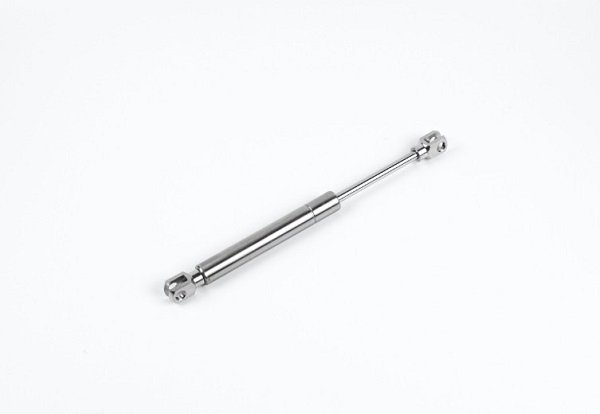
In industrial equipment, automotive manufacturing, marine engineering and other fields, the corrosion resistance of Stainless Steel Gas Spring is a key factor to ensure the long-term stable operation of equipment. With the complexification of the global industrial environment and the increasing demand for oxidation resistance and chemical corrosion resistance, stainless steel has become the preferred solution in the gas spring field due to its unique alloy characteristics. This article will deeply analyze the corrosion resistance principles and advantages of Stainless Steel Gas Spring from the dimensions of material science, application scenarios and maintenance strategies.
The Chemical Basis of Stainless Steel: The Core of Corrosion Resistance
The corrosion resistance of Stainless Steel Gas Spring originates from its alloy composition and surface protection mechanism.
The "Self-Healing" Effect of Chromium
Stainless steel typically contains ≥10.5% chromium. When exposed to oxygen or moisture, chromium combines with oxygen to form a dense chromium oxide (Cr₂O₃) protective film. This film is only nanometers thick but can effectively isolate corrosion media such as water and chloride ions from contacting the metal matrix. Even if scratches occur on the surface due to mechanical friction, the oxide film can self-repair in an oxygen-rich environment to prevent corrosion from spreading.
Alloy Strengthening Design
High-end Stainless Steel Gas Spring adds elements such as nickel (to improve toughness) and molybdenum (to enhance chloride ion resistance). For example, 316L stainless steel, with 2%-3% molybdenum content, performs particularly well in marine salt spray or chemical acidic environments.
Structural Design and Manufacturing Processes: Dual Guarantees for Performance
Beyond material selection, manufacturing processes and structural optimization further enhance the corrosion resistance of Stainless Steel Gas Spring.
Precision Sealing Technology
Laser welding or argon arc welding processes are used to ensure no gaps at the joints between the gas spring cylinder and piston rod, preventing corrosion media from penetrating into the internal nitrogen chamber. Some high-end products also coat the sealing rings with polytetrafluoroethylene (PTFE) to reduce friction loss while enhancing chemical inertness.
Surface Treatment Processes
Electrolytic polishing or passivation treatment can eliminate micro-defects (such as burrs and impurities) on the stainless steel surface, making the oxide film more uniform and dense. In some special scenarios, the gas spring surface can also adopt PVD coating technology to further improve wear resistance and corrosion resistance.
Practical Application Scenarios: Validation of the Value of Corrosion Resistance
The corrosion resistance of Stainless Steel Gas Spring demonstrates its irreplaceability in the following scenarios:
Marine and Ship Engineering
In offshore platforms or ship deck equipment with high salt spray concentrations, traditional carbon steel gas springs are prone to jamming due to corrosion, while stainless steel materials can be used stably for more than 10 years.
Chemical and Pharmaceutical Equipment
Valve control systems exposed to acid-base solvents or high-temperature steam rely on the chemical corrosion resistance of stainless steel gas springs to avoid product purity contamination caused by metal ions.
Food Processing Machinery
Stainless steel materials compliant with FDA hygiene standards can not only resist cleaning agent corrosion but also prevent microbial growth, ensuring safety in the production process.
Maintenance and Life Optimization: Strategies to Prolong Corrosion Resistance
Reasonable use and maintenance can maximize the performance potential of Stainless Steel Gas Spring:
Regular Cleaning and Inspection
Use neutral cleaning agents to remove surface stains and avoid long-term adhesion of chlorides or organic matter. Inspect the condition of seals every six months and replace aging components in a timely manner.
Environmentally Adaptable Selection
In extreme acidic environments (such as electroplating workshops), it is recommended to use molybdenum-containing 316 series; in conventional industrial scenarios, 304 stainless steel can balance cost and performance.
Choose Colewell to Define New Standards for Corrosion Resistance
As an enterprise with deep expertise in precision gas spring technology, Colewell is committed to providing full-scenario corrosion protection solutions through ISO 9001 certification. Our Stainless Steel Gas Spring uses customized alloy formulations and fully automatic welding production lines to ensure consistent performance in harsh working conditions from deep seas to deserts. Contact Colewell today and let professional engineers tailor long-lasting corrosion resistance solutions for your equipment!

