

 Sign in
 CN
CN

Tooling box gas spring working principle
 Nov 28, 2025|
 View:83
The gas spring in a tooling box (also known as a toolbox gas spring) works on the same fundamental principles as any standard gas spring, but it is specifically designed to assist in the smooth opening, closing, and positioning of heavy lids or covers in toolboxes or similar enclosures.
Here's how it works in more detail, with a focus on the specific application for toolboxes:
Gas Spring Working Principle in Tooling Boxes
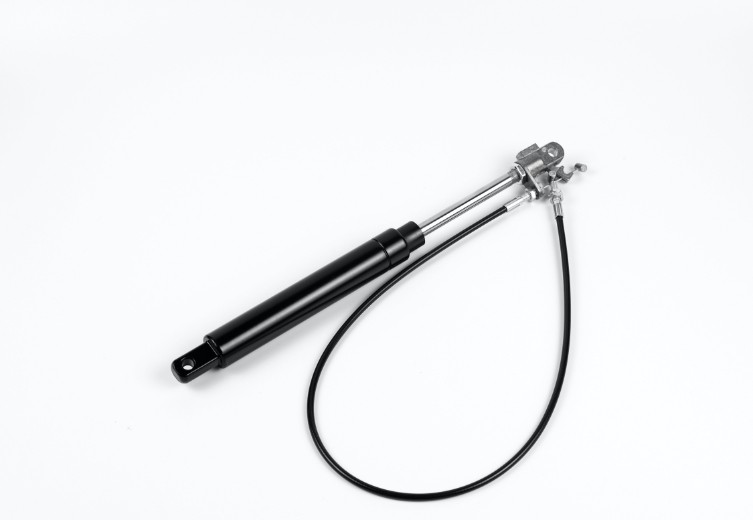
A tooling box gas spring is essentially a gas-assisted lifting mechanism that allows a heavy lid or cover of a toolbox to open and close smoothly, without requiring a lot of manual effort. It is designed to handle the weight of the lid and provide controlled movement.
1. Components of a Tooling Box Gas Spring
Cylinder : A sealed tube containing nitrogen gas under high pressure.
Piston : Inside the cylinder, the piston divides the gas spring into two chambers.
Piston Rod : A rod that extends from the piston, connecting to the lid or cover of the toolbox.
Orifice : A small hole in the piston that allows oil (or sometimes air) to pass through as the gas spring compresses and extends.
Seals : Prevent the nitrogen gas from escaping and protect the internal parts from dirt and moisture.
End Fittings : Connects the gas spring to the toolbox lid and the body of the toolbox.
2. Core Working Principle
Gas Pressure : The gas spring is filled with high-pressure nitrogen gas. The gas exerts a force against the piston, and this force helps lift the lid or cover of the toolbox.
Extending the Piston Rod : When the toolbox lid is opened, the gas pressure pushes the piston rod out of the cylinder. This provides the lifting force required to hold the lid open. The gas is compressed in one chamber of the cylinder, which generates the required force.
Damping Action : The piston rod’s movement is controlled by the oil-filled orifice. As the piston moves in and out, the oil flows through the orifice, providing damping to control the speed and prevent the lid from slamming shut or opening too quickly. This is particularly important to ensure safety and prevent damage to both the lid and the users.
3. Opening and Closing the Toolbox Lid
Opening: When you lift the lid of the toolbox, the gas spring provides assistance by using the pressure of the gas to push the lid upwards. The damping slows the motion near the top of the opening, so the lid doesn’t spring open too forcefully or damage the hinge mechanism.
Closing : When you close the toolbox, the gas spring resists the downward motion slightly to slow the lid’s fall. The gas pressure helps to control the speed, preventing the lid from crashing down and ensuring that the lid closes gently.
4. Benefits of Gas Springs in Toolboxes
Smooth Motion: Gas springs provide a smooth and controlled lifting and lowering action, reducing the effort required to open or close a heavy lid.
Hands-Free Operation: Once the lid is lifted, the gas spring holds it open, reducing the need for manual support and freeing up your hands for other tasks.
Safety: By controlling the speed of movement, gas springs prevent sudden, forceful closures that could injure the user or damage the toolbox.
Durability: Gas springs are designed for high cycles (often 30,000–100,000 cycles), making them ideal for applications like toolboxes that are frequently opened and closed.
Customizable Force: Gas springs can be tailored to match the weight of the lid, ensuring that the force is just right to support easy operation without being too weak or too strong.
5. Common Applications for Tooling Box Gas Springs
Toolboxes: Gas springs are most commonly used in larger toolboxes or equipment storage containers, where heavy lids or covers need to be raised and held open.
Cargo Boxes: In utility vehicles or trucks, gas springs assist in the opening and closing of cargo boxes or compartments.
Storage Cabinets: Tool storage cabinets, especially those with heavy doors or lids, use gas springs to make the doors easier to open and close.
Workbenches: Some workbenches, especially those with built-in storage compartments, use gas springs to assist in the movement of the work surface or storage lid.
6. Example: A Gas Spring in a Tool Chest
Imagine a large tool chest with a heavy metal lid. Without gas springs, the user would need to exert significant force to open the lid, and it might be hard to hold it in the open position. By installing a gas spring on each side of the lid, the chest would be much easier to open with minimal effort. The gas springs would assist in lifting the lid, and once the lid reaches a certain height, the springs would hold it in place. As you begin to close it, the gas springs would slow the lid's descent, ensuring it doesn’t slam shut.