


 Sign in
 CN


What Does Gas Spring 250N Mean? Load Capacity and Common Applications Explained
 Sep 17, 2025|
 View:353
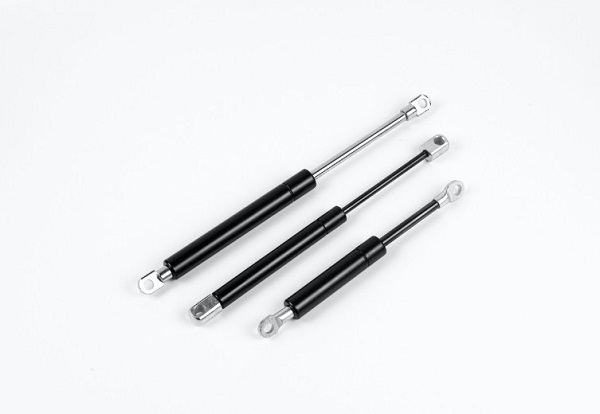
A gas spring 250N is a pneumatic support device with a force rating of 250 Newtons. The specification indicates the extension force the spring delivers through its stroke, and understanding that rating helps determine whether the component suits a given application. In automotive, furniture and industrial systems, a 250N gas strut supplies controlled motion for lifting, positioning and support.
Key Takeaways
Gas springs with a 250N rating deliver approximately 56 pounds of lifting force through their stroke.
The force rating correlates with load capacity, supporting weights up to 25 kilograms under favorable geometry and conditions.
Temperature, mounting angle and installation details affect the usable load in a real assembly.
Automotive applications use 250N ratings for hood supports, trunk lids and tailgate systems.
Furniture installations use 250N force for cabinet doors and adjustable mechanisms.
Industrial equipment uses 250N ratings for access panels, covers and positioning systems.
Selection should account for stroke length, mounting configuration and environmental conditions.
Components from documented, certified production support traceable performance and compliance.
What Is a Gas Spring 250N?
Basic Structure
A gas spring 250N consists of a sealed cylinder filled with pressurized nitrogen gas and a piston rod assembly. Manufacturers typically use high-grade steel for the cylinder body and chrome-plated steel for the piston rod, providing corrosion resistance and durability. Each unit weighs approximately 0.5 to 1.5 kg depending on stroke length and contains a sealed chamber with nitrogen under pressure. The piston assembly includes seals and valves that control gas flow during compression and extension, which is how the unit holds a relatively steady force through its travel.
Note: a force rating indicates the extension force measured as the rod moves from compressed to fully extended. Compression force is typically 10 to 15% higher than the extension rating.
| Component/Characteristic | Description |
|---|---|
| Force Rating | 250 Newtons (approximately 56 pounds) |
| Typical Stroke Range | 50mm to 400mm |
| Rod Diameter Options | 6mm, 8mm, 10mm, 12mm |
| Cylinder Materials | High-grade steel, aluminum alloy |
| Sealing Systems | Multi-lip seals, O-rings |
| Gas Medium | Nitrogen (pressurized) |
| Operating Temperature | -30°C to +80°C |
| Mounting Options | Ball joints, threaded studs, clevis brackets |
Force Rating Explained
The 250N designation refers to force measured in Newtons, where one Newton is the force required to accelerate one kilogram at one meter per second squared. A 250N gas strut generates approximately 56 pounds of force, making it suitable for lifting and supporting loads up to 25 kilograms (55 pounds) in vertical applications. The force stays relatively constant through the stroke, which gives predictable behavior. Actual load capability also depends on the lever geometry between the mounting points, not only on the force number.
| Position | Force Characteristics | Description |
|---|---|---|
| Fully Extended | 250N (maximum) | Peak force output at full extension |
| Mid-Stroke | 245-250N | Consistent force throughout stroke |
| Fully Compressed | 275-285N | Slightly higher compression force |
| Temperature Impact | ±5-10% variation | Force changes with ambient temperature |
Force output varies with installation angle, with vertical mounting providing the highest effective support. Horizontal installations reduce effective force by roughly 15 to 20%, and angled mounting changes the effective component according to the geometry of the linkage.
Key Functions
Gas spring 250N units serve several functions. They provide controlled lifting assistance, reducing the manual effort required to operate lids, doors or panels. The spring action decelerates closing motion, limiting impacts that could damage equipment or cause injury. Position holding allows components to remain partly open without additional supports.
Controlled lifting assistance reduces operator effort substantially
Smooth deceleration limits damage from sudden closures
Position holding maintains intermediate positions without locks
Vibration dampening reduces noise and mechanical stress
Weather sealing protects internal mechanisms from environmental factors
Tip: verify that the mounting orientation matches the application before installation; incorrect orientation reduces performance and service life. Understanding how gas springs function helps users select appropriate components for specific needs.
Check the Force Against the Application
Force, stroke and end fittings can be reviewed together against the lid or panel being supported.
Importance
Load Capacity Performance
Gas spring 250N units provide load support in mechanical assemblies. The nitrogen filling resists compression, creating a spring effect that supports loads through the operating range. Without suitable sizing, a system may be difficult to open or may close too quickly. The materials used, including high-grade steel and specialized seals, are selected for pressure cycles and environmental exposure. If the force rating does not match the load and geometry, the unit cannot provide adequate support.
Note: the load design allows a component to support a designated weight while keeping motion smooth, and it must accommodate dynamic loads and position changes across the stroke.
Safety in Mechanical Systems
Gas spring 250N components contribute to equipment safety by controlling lid and panel motion. A failed or under-rated unit can allow a component to close unexpectedly, so system designers evaluate mounting conditions, load characteristics and environment before installation. Safety-critical assemblies should use components with ratings and certifications appropriate to the duty.
Regular inspection for seal integrity and rod damage
Use of manufacturer-approved components
Prompt replacement of worn or damaged units
Proper mounting to prevent side loading and premature failure
Application Versatility
A 250N rating is a widely used force class, so replacement units from different suppliers can offer similar nominal characteristics. Automotive and furniture systems may use comparable specifications, which simplifies inventory and maintenance. Industrial equipment benefits from the same standardization. Compatibility reduces engineering work for each application, although end fittings and stroke still need to be matched.
How They Work
Pressure and Force Generation
Gas spring 250N units operate through compressed nitrogen sealed in a cylinder chamber. Gas pressure acts on a piston connected to the extending rod. Nitrogen pressure commonly falls in the 50 to 150 bar range depending on force rating and stroke length, and the piston includes controlled orifices that regulate flow during compression and extension. That flow control produces the damped motion used for lifting and positioning.
Nitrogen maintains pressure across a practical temperature range
A sealed cylinder limits contamination and pressure loss
Controlled orifices provide damping during operation
Force curves are designed to accommodate different load requirements
Tip: install gas springs in the orientation specified for the unit so that internal components are not damaged and the stated performance is maintained.
Extension and Compression Cycles
During extension, gas pressure pushes the piston outward and produces the rated 250N force. During compression, gas is forced through calibrated orifices, creating resistance and smooth motion. The design keeps force output reasonably even through the stroke. Multi-stage sealing systems maintain pressure integrity: primary seals limit gas leakage while allowing rod movement, and secondary seals provide backup protection against contamination.
Mounting and Installation Systems
Gas spring 250N components connect to applications through standard mounting systems. The cylinder end typically uses threaded studs, ball joints or clevis brackets; the rod end uses similar options. The connection must accommodate the full stroke without binding or interference.
Ball joint mounts permit multi-axis movement for complex motion paths
Threaded stud mounts provide a rigid connection for linear applications
Clevis brackets allow single-axis pivoting for doors and lids
Welded mounts provide permanent attachment for high-stress installations
Mounting hardware must carry the rated force plus a safety factor for dynamic and side loads. Alignment prevents side loading that would damage seals and shorten service life.
Types and Materials
Steel Grades and Construction
Across the gas spring product range, manufacturers select high-grade steel for gas spring 250N cylinders because it handles internal pressure, resists corrosion and maintains dimensional stability. Steel also resists fatigue in components that cycle many times during service. The material retains its properties across the stated -30°C to +80°C range. Carbon content is chosen for weldability, and processes such as stress relieving and surface hardening improve durability. Production batches are checked mechanically, including pressure testing, before release.
Manufacturing Processes
Making a gas spring 250N involves several steps. Cylinder tubes are machined to specified dimensions and surface finishes. Piston components with calibrated orifices and sealing systems are assembled under controlled cleanliness and alignment. Gas filling is carried out under controlled conditions to reach the specified pressure. Each unit then receives performance testing that checks force output, stroke smoothness and seal integrity, followed by dimensional and cosmetic inspection.
Extension Force vs Compression Force
Extension force is the rated lifting capability of 250N. Compression force is higher, around 275 to 285N, because gas compression and flow restriction add resistance during closing.
Extension force: 250N rated
Compression force: 275-285N
Force consistency: about ±5% through the stroke
Temperature effect: about ±10% across the operating range
Both figures matter in design: extension force determines lifting capability, while compression force affects closing control and positioning accuracy.
Rod Diameter and Stroke Options
Rod diameter affects load capacity and column stability; stroke length determines the available travel.
| Rod Diameter | Load Capacity | Stability | Typical Applications |
|---|---|---|---|
| 6mm | Light duty | Moderate | Small cabinets, electronics |
| 8mm | Medium duty | Good | Automotive, furniture |
| 10mm | Heavy duty | High | Industrial equipment |
| 12mm | Extra heavy | Maximum | Large panels, machinery |
Strokes for 250N units commonly run from 50mm to 400mm. Shorter strokes suit compact installations; longer strokes allow greater travel. Rod diameter and stroke together determine the overall dimensions and mounting requirements.
Load Capacity and Performance
Understanding Force Ratings
The 250N rating indicates the extension force available for lifting and supporting loads, roughly 56 pounds, which suits medium-duty work. Vertical mounting provides the highest capacity, with 250N struts supporting up to 25 kg (55 lbs) in favorable geometry. Horizontal mounting reduces capacity by 15 to 20% through gravitational effects and seal friction. Angled installations change capacity according to the mounting geometry.
Temperature Effects on Performance
Gas spring performance changes with ambient temperature because the nitrogen pressure changes.
| Temperature Range | Force Variation | Performance Impact |
|---|---|---|
| -30°C to 0°C | -5% to -10% | Reduced lifting force |
| 0°C to 20°C | ±2% | Nominal performance |
| 20°C to 50°C | +2% to +5% | Slightly increased force |
| 50°C to 80°C | +5% to +10% | Maximum safe operating force |
These changes matter where a product is used in widely varying climates. Safety factors should be based on the minimum expected force at the coldest operating temperature.
Dynamic Load Considerations
Dynamic loading differs from static calculation. Acceleration and deceleration forces can exceed static values by 50 to 100%, and vibration or shock adds further demand. Engineers commonly apply safety factors of 1.5 to 2.0 for dynamic applications so that the unit performs under changing conditions.
Size the Spring for the Worst Case
Load, angle, temperature and cycle count can be reviewed together before a force rating is fixed.
Common Applications
Automotive Gas Springs
Automotive gas springs frequently use 250N ratings. Hood supports rely on this force level for engine compartment access with controlled closing. Trunk lid systems in sedans and hatchbacks use it for smooth opening without excessive speed at the hinges. Tailgate applications in compact trucks and SUVs use 250N units to balance weight distribution. Commercial vehicles and specialty equipment use the same rating on service panels, access doors and equipment compartments.
Furniture Gas Spring Applications
Furniture gas springs with 250N ratings appear in cabinet doors, including kitchen upper cabinets, where they provide controlled opening and soft closing. Adjustable seating and ergonomic furniture use them for height mechanisms. Storage pieces such as ottoman tops, bench lids and lift-up cabinet doors use the force for assisted lifting. Bed mechanisms use 250N components for adjustable headrests and under-bed storage access.
Industrial Equipment Applications
In the application cases for machine access, gas spring 250N components appear on access panels and protective covers, where controlled motion protects sensitive parts and operators. Machine enclosures benefit from predictable opening and closing. Electronic housings and control panel covers use the rating for operator access while shielding internal components. Testing and measurement equipment uses the units for positioning and protective covers, and material handling equipment uses them for chute controls, gates and positioning mechanisms.
Installation and Selection
Mounting Considerations
Installation affects performance and service life. Brackets must be rated for the application load with suitable safety factors, and fastening must be secure while allowing for tolerances and thermal movement. Orientation changes behavior:
Vertical, rod up: highest force output and service life
Vertical, rod down: standard performance with gravity assistance
Horizontal: reduced capacity and increased seal wear
Angled: performance varies with the mounting geometry
Mounting points must stay aligned through the full stroke. Misalignment produces side loading, which damages seals.
Selection Criteria
Choosing a 250N gas strut involves several factors beyond force:
Load analysis: include dynamic factors, temperature effects and aging
Stroke requirements: set minimum and maximum travel from the mounting geometry
Environment: review temperature, humidity, chemical exposure and vibration
Cycling: estimate the number of operations over the service life
Safety Factors and Compliance
Commonly cited design safety factors are shown below. The figures are planning guidance, not a substitute for the requirements of a specific standard or application.
| Application Type | Safety Factor | Design Consideration |
|---|---|---|
| Static loads | 1.5-2.0 | Account for temperature and aging |
| Dynamic loads | 2.0-2.5 | Include acceleration and shock factors |
| Safety-critical | 2.5-3.0 | Maximum reliability requirements |
| Outdoor exposure | 2.0-2.5 | Environmental degradation factors |
Regular inspection identifies seal leakage, rod damage and mounting wear before failure. Maintenance of work equipment guidance and the work equipment regulations are useful references for inspection planning in an industrial setting.
Practical Applications
Loading and Support Systems
Gas spring 250N components reduce manual effort when accessing heavy lids, panels or covers. Consistent force through the stroke gives predictable assistance, improving operator safety. Tip: verify that mounting points can handle static and dynamic loads with the chosen safety margin.
Positioning and Control
Controlled compression and extension allow components to be held at intermediate points through the stroke, often removing the need for separate locks.
Components can be stopped at positions through the stroke
Controlled motion limits sudden movement
Vibration damping reduces noise and stress
The sealed design resists environmental factors
This approach reduces maintenance compared with some mechanical alternatives.
Maintenance and Service Access
Service panels, inspection doors and access covers benefit from controlled opening that holds position during work. The gas spring reduces the chance of accidental closure. Checking seal condition, rod surface and mounting hardware during routine service helps prevent interruptions.
Identification & Maintenance
Quality Assessment
Quality gas spring 250N components show uniform surface finishes and corrosion resistance. Rod surfaces should be free of scoring, pitting and irregularities that could damage seals. A smooth stroke without binding or force jumps is another indicator. Look for manufacturer identification marks and certification labels that allow the component to be traced to a specification.
International quality expectations call for replacement of components showing seal leakage, rod damage or mounting deterioration. Early detection reduces downtime and supports safety.
Performance Verification
Technicians test force at several points through the stroke using calibrated equipment. Force should remain within ±5% of the rated specification across the operating range.
| Checkpoint | Acceptable Range | Action Required |
|---|---|---|
| Extension Force | 237-262N | Normal operation |
| Compression Force | 260-300N | Normal operation |
| Stroke Smoothness | No binding or hesitation | Normal operation |
| Seal Integrity | No visible leakage | Normal operation |
| Surface Condition | No scoring or corrosion | Normal operation |
Components outside these ranges should be replaced to avoid malfunction or safety issues. Force values should be interpreted with a calibrated instrument; measurement science guidance explains why traceable calibration matters when comparing readings.
Service Guidelines
Clean external surfaces to remove contaminants that could damage seals or cause corrosion. Rod surfaces need particular care to avoid scoring. Inspection frequency should reflect duty cycle and environment, with high-cycle applications checked more often than occasional-use installations. Maintenance records help track condition and predict replacement timing.
Replacement Indicators
Several conditions call for immediate replacement:
Seal leakage: visible oil or gas leakage
Rod damage: scoring, pitting or coating damage
Force loss: output below 90% of rating
Binding operation: rough or inconsistent stroke motion
Mounting damage: cracked or deformed attachment points
Earlier planning indicators include reduced force at 90 to 95% of rating, minor surface wear and a high accumulated cycle count.
Replacement Procedures
Replacement follows a sequence: shut down and secure the equipment, remove the failed unit, inspect the mounting points, install the new unit with correct orientation, test force and smoothness, and record the work.
| Step | Safety Consideration | Quality Check |
|---|---|---|
| Shutdown | Lock out energy sources | Verify zero energy state |
| Removal | Support connected components | Prevent damage during removal |
| Installation | Proper alignment | No side loading |
| Testing | Functional verification | Force and smoothness check |
| Documentation | Maintenance records | Traceability |
Note: replacement should be carried out by trained personnel using suitable tools and procedures.
Conclusion
Gas spring 250N components provide controlled motion across automotive, furniture and industrial systems. The rating corresponds to roughly 56 pounds of extension force and, in favorable geometry, can support loads around 25 kilograms. Force output stays fairly even through the stroke, while temperature and mounting angle change the usable support in service. Selection should be based on measured loads, stroke geometry, environmental conditions and appropriate safety factors rather than the force number alone.
Installation quality, inspection and timely replacement determine how long an assembly performs as intended. A documented specification with traceable test results makes later replacement simpler and reduces the risk of mismatched components.
FAQ
What does 250N mean in gas spring specifications?
The 250N rating indicates 250 Newtons of extension force, approximately 56 pounds. This force rating determines the component's lifting and support capability.
How much weight can a 250N gas strut support?
A 250N gas strut can support loads up to about 25 kilograms (55 pounds) in vertical mounting configurations. Horizontal or angled mounting reduces effective capacity according to the linkage geometry.
Are gas spring force ratings consistent throughout the stroke?
Gas spring 250N components maintain relatively consistent force through the stroke, typically within about ±5% of the rated value, which gives predictable support at different positions.
How does temperature affect gas spring performance?
Temperature can change force output by roughly ±10% across typical operating ranges. Cold conditions may reduce force by 5 to 10%, while hotter conditions increase it.
What is the difference between extension and compression force?
Extension force is the rated lifting capability of 250N. Compression force is typically 10 to 15% higher because gas compression and flow restriction add resistance during the closing stroke.
How do I know when a gas spring needs replacement?
Replace units showing seal leakage, rod damage, force below 90% of rating, or binding operation. Visible damage to the rod or mounting points calls for prompt replacement.
Which mounting orientations suit gas springs?
Vertical mounting with the rod upward gives the highest performance and service life. Horizontal mounting reduces capacity and increases seal wear, while angled installations change capacity according to the geometry.
Further reading on this site: Furniture Gas Springs: Types, Uses, Force Calculation and Replacement Tips and Why Choose Easy Gas Spring 60N? Compact Power for Everyday Applications.
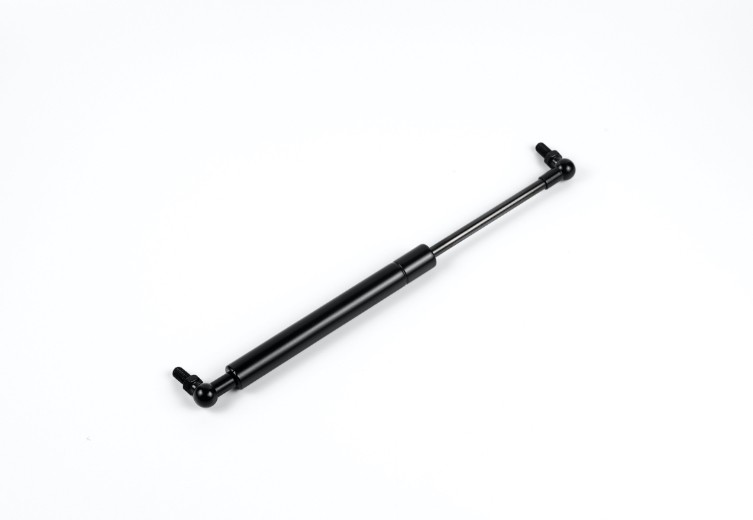
250N Lift Support Gas Spring
Ball joint end fittings for lids and panels that move through an arc.
View Product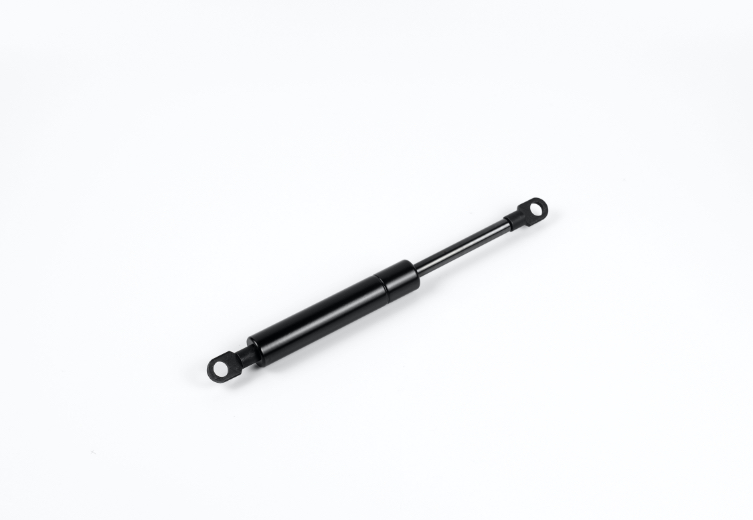
Eyelet Mount Gas Spring
Eyelet fittings for straightforward pivot connections on cabinets and covers.
View Product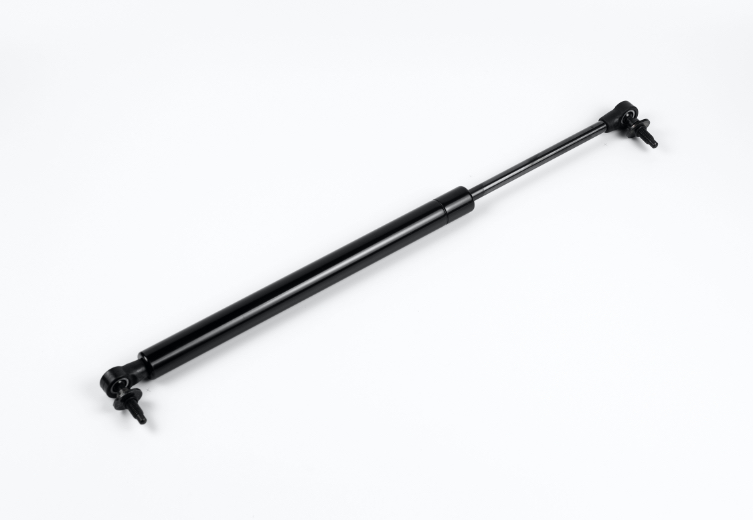
Automotive Gas Strut
Ball socket fittings used where a lid or tailgate requires multi-axis movement.
View ProductReferences and Notes
Guidance on maintaining work equipment — basis for inspection and maintenance planning (hse.gov.uk, accessed 2026-11-20).
Work equipment regulations — context for safe operation and maintenance of equipment (legislation.gov.uk, accessed 2026-11-20).
Measurement science and calibrated force measurement — why force verification needs traceable instruments (nist.gov, accessed 2026-11-20).
Automotive engineering standards catalogue — context for vehicle component specifications (sae.org, accessed 2026-11-20).
Data notes: all seven tables are reproduced verbatim from the source article. Force, stroke, temperature and safety factor figures are category-level values from that article, not a datasheet for one model; verify against the specific part before specification. The 250N rating is a nominal extension force, and usable load depends on mounting geometry. Earlier links to AI chat shares, competing manufacturers and unrelated standard pages were removed because they did not support the statements they accompanied. The COLEWELL self-recommendation in the original conclusion was replaced with neutral selection guidance.

