


 Sign in
 CN
CN

What Does Gas Spring 250N Mean? Load Capacity and Common Applications Explained
 Sep 17, 2025|
 View:46
A gas spring 250N represents a pneumatic support device with a force rating of 250 Newtons. This specification indicates the maximum extension force the spring can deliver throughout its operational stroke. Understanding the force rating helps users determine whether this component suits their specific application requirements.
[Industry applications demonstrate several key advantages:]
- Standardized 250N rating provides consistent force output across different manufacturers
- Moderate force level suits medium-duty lifting and support applications
- Gas-filled cylinders maintain performance in various temperature conditions
- Sealed design offers maintenance-free operation throughout service life
- Compact size fits into space-constrained installation environments
A 250N gas strut provides the controlled motion needed for smooth operation in automotive, furniture, and industrial applications.
Key Takeaways
- Gas springs with 250N rating deliver approximately 56 pounds of lifting force throughout their stroke
- Force rating directly correlates to load capacity, supporting weights up to 25 kilograms under optimal conditions
- Temperature variations, mounting angles, and installation factors affect actual performance capabilities
- Automotive applications commonly use 250N ratings for hood supports, trunk lids, and tailgate systems
- Furniture gas spring installations benefit from 250N force for cabinet doors and adjustable mechanisms
- Industrial equipment incorporates 250N ratings for access panels, covers, and positioning systems
- Proper selection requires considering stroke length, mounting configuration, and environmental conditions
- Quality components from certified manufacturers ensure reliable performance and safety compliance
What Is a Gas Spring 250N?
Basic Structure
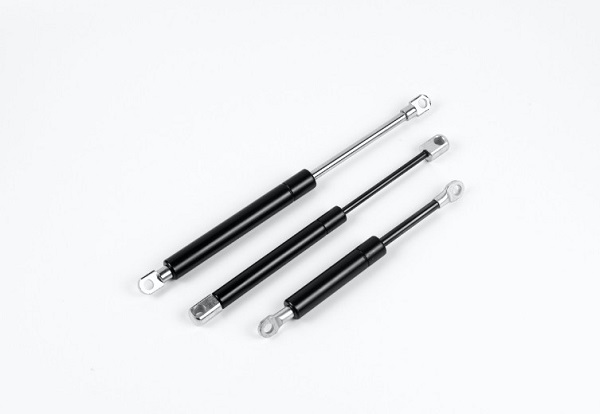
A gas spring 250N consists of a sealed cylinder filled with pressurized nitrogen gas and a piston rod assembly. Manufacturers typically use high-grade steel for the cylinder body and chrome-plated steel for the piston rod, providing excellent corrosion resistance and durability. Each unit weighs approximately 0.5-1.5 kg depending on stroke length and features a sealed chamber containing nitrogen gas under pressure. The piston assembly includes seals and valves that control gas flow during compression and extension cycles. This design ensures that gas springs maintain consistent force output throughout their operational range.
Note: Force ratings indicate maximum extension force, measured when the gas spring moves from compressed to fully extended position. Compression forces typically measure 10-15% higher than rated extension forces.
| Component/Characteristic | Description |
Force Rating | 250 Newtons (approximately 56 pounds) |
Typical Stroke Range | 50mm to 400mm |
Rod Diameter Options | 6mm, 8mm, 10mm, 12mm |
Cylinder Materials | High-grade steel, aluminum alloy |
Sealing Systems | Multi-lip seals, O-rings |
Gas Medium | Nitrogen (pressurized) |
Operating Temperature | -30°C to +80°C |
Mounting Options | Ball joints, threaded studs, clevis brackets |
Force Rating Explained
The 250N designation refers to the force measurement in Newtons, where one Newton equals the force required to accelerate one kilogram at one meter per second squared. A 250N gas strut generates approximately 56 pounds of force, making it suitable for lifting and supporting loads weighing up to 25 kilograms (55 pounds) in vertical applications. The force remains relatively constant throughout the stroke, providing predictable performance characteristics.
| Position | Force Characteristics | Description |
Fully Extended | 250N (maximum) | Peak force output at full extension |
Mid-Stroke | 245-250N | Consistent force throughout stroke |
Fully Compressed | 275-285N | Slightly higher compression force |
Temperature Impact | ±5-10% variation | Force changes with ambient temperature |
Force output varies based on installation angle, with vertical mounting providing maximum efficiency. Horizontal installations reduce effective force by approximately 15-20%, while angled mounting affects performance proportionally based on the sine of the mounting angle.
Key Functions
Gas spring 250N units serve multiple critical functions across various applications. They provide controlled lifting assistance, reducing the manual effort required to operate heavy lids, doors, or panels. The spring action offers smooth deceleration during closing operations, preventing sudden impacts that could damage equipment or cause injury. Position holding capabilities allow components to remain in partially open positions without additional support mechanisms.
- Controlled lifting assistance reduces operator effort by up to 90%
- Smooth deceleration prevents damage from sudden closures
- Position holding maintains intermediate positions without locks
- Vibration dampening reduces noise and mechanical stress
- Weather sealing protects internal mechanisms from environmental factors
Tip: Always verify that the gas spring 250N mounting orientation matches the application requirements. Incorrect installation can significantly reduce performance and service life.
Understanding how gas springs function helps operators select appropriate components for their specific needs. The consistent force output throughout the stroke provides reliable performance, while the sealed design eliminates maintenance requirements during normal service life.
Importance
Load Capacity Performance
Gas spring 250N units provide essential load support in numerous mechanical applications. These components create a reliable lifting system that maintains consistent performance under varying conditions. The nitrogen gas filling resists compression, creating a spring effect that supports loads throughout the operational range. Without proper gas spring sizing, systems may fail to operate smoothly or require excessive manual effort. The materials used—such as high-grade steel and specialized seals—are selected for their ability to withstand pressure cycles and environmental exposure. Quality standards ensure that each 250N gas strut meets performance specifications. If a gas spring does not meet load requirements, it cannot provide adequate support for the intended application.
Note: The load capacity design of gas springs allows components to support designated weights while maintaining smooth operation. This design also accommodates dynamic loads and position changes throughout the stroke range.
Safety in Mechanical Systems
Gas spring 250N components play a crucial role in maintaining operator and equipment safety. When lids, doors, or panels are lifted or positioned, the gas spring provides controlled motion that reduces accident risks. This reduces the possibility of sudden closures that could cause injury or equipment damage. If a gas spring fails, components could close unexpectedly, creating hazardous conditions. For this reason, system designers specify gas springs with appropriate safety factors before installation. They evaluate mounting conditions, load characteristics, and environmental factors. Only gas springs with proper ratings and certifications should be used in safety-critical applications.
- Regular inspection for seal integrity and rod damage
- Use of only manufacturer-approved components
- Immediate replacement of worn or damaged units
- Proper mounting to prevent side loading and premature failure
Application Versatility
Gas spring 250N ratings make it possible for components to function across diverse applications and industries. The standardized force rating means that replacement units from different manufacturers can provide similar performance characteristics. Automotive systems use the same gas spring specifications as furniture applications, simplifying inventory and maintenance requirements. Industrial equipment benefits from this standardization, allowing for consistent performance across different installations. This compatibility saves time and reduces costs because components do not require custom engineering for each application.
Tip: Standardized 250N gas strut specifications enable reliable performance across multiple industries, making component selection and replacement more efficient.
How They Work
Pressure and Force Generation
Gas spring 250N units operate through compressed nitrogen gas sealed within a cylinder chamber. The gas pressure acts against a piston assembly connected to the extending rod. Nitrogen pressure typically ranges from 50-150 bar depending on the spring's force rating and stroke length. The piston includes controlled orifices that regulate gas flow during compression and extension cycles. This controlled flow creates the smooth motion characteristics that make gas springs effective for lifting and positioning applications.
- Nitrogen gas maintains consistent pressure across temperature ranges
- Sealed cylinder design prevents contamination and pressure loss
- Controlled orifices provide dampening during operation
- Progressive force curves accommodate varying load requirements
Gas spring 250N components must withstand high internal pressures while maintaining seal integrity. The cylinder materials resist fatigue from pressure cycling, while specialized seals prevent gas leakage throughout the service life.
Tip: Always ensure gas springs are installed with proper orientation to prevent internal damage and maintain performance specifications.
Extension and Compression Cycles
Force generation in 250N gas strut units occurs through controlled gas compression and expansion. During extension, gas pressure pushes the piston outward, creating the rated 250N force. Compression cycles force gas through calibrated orifices, providing controlled resistance and smooth motion. The gas spring design maintains force output throughout the stroke range, ensuring consistent performance at any position.
Gas spring 250N units incorporate multi-stage sealing systems to maintain pressure integrity. Primary seals prevent gas leakage while allowing smooth rod movement. Secondary seals provide backup protection and contamination resistance. This sealing approach ensures reliable operation throughout millions of cycles.
Mounting and Installation Systems
Gas spring 250N components connect to applications through standardized mounting systems. The cylinder end typically features threaded studs, ball joints, or clevis brackets for secure attachment. Rod ends utilize similar mounting options, allowing for flexible installation configurations. Workers install gas springs by aligning mounting points and securing with appropriate fasteners. The connection system must accommodate the full stroke range without binding or interference.
There are several mounting configurations for 250N gas strut applications:
- Ball joint mounts: Allow multi-axis movement, ideal for complex motion paths
- Threaded stud mounts: Provide rigid connection for linear applications
- Clevis brackets: Enable single-axis pivoting for door and lid applications
- Welded mounts: Permanent attachment for high-stress installations
Mounting hardware must support the full rated force plus safety factors. Each connection point can support forces up to 300N to accommodate dynamic loads and side forces. The materials and dimensions must match application requirements and environmental conditions.
Note: Proper mounting alignment prevents side loading that can damage seals and reduce service life, ensuring safe and reliable gas spring 250N operation.
Types and Materials
Steel Grades and Construction
Manufacturers select high-grade steel for gas spring 250N cylinders because it can handle high internal pressures, resist corrosion, and maintain dimensional stability. Steel also provides excellent fatigue resistance, which is essential for components that cycle millions of times during service life. This material maintains its mechanical properties in temperature ranges from -30°C to +80°C. These characteristics make steel the preferred choice for gas spring cylinders used in demanding applications.
To meet performance and safety standards, 250N gas strut components must follow industry specifications and quality requirements. Production occurs in certified facilities that verify material composition, mechanical properties, and dimensional accuracy. The steel's chemical composition must meet strength requirements, with carbon content optimized for weldability. Heat treatment processes, such as stress relieving and surface hardening, improve durability and service life. Each production batch undergoes mechanical testing, including pressure testing, to ensure gas springs meet performance specifications.
Manufacturing Processes
The process of manufacturing gas spring 250N units involves several precision steps. Manufacturers begin by machining cylinder tubes to precise dimensions and surface finishes. Workers then assemble piston components with calibrated orifices and sealing systems. During assembly, they control cleanliness and component alignment to ensure proper function. Gas filling occurs under controlled conditions to achieve specified pressure levels.
After assembly, each 250N gas strut undergoes performance testing. Quality control teams verify force output, stroke smoothness, and seal integrity. These tests ensure every gas spring meets specifications before shipping. Final inspection includes dimensional verification and cosmetic evaluation.
Tip: Quality manufacturing processes and testing help gas spring 250N components deliver reliable performance throughout their service life.
Extension Force vs Compression Force
Gas springs exhibit different force characteristics during extension and compression cycles. Gas spring 250N units provide the rated force during extension, when the rod moves outward from the cylinder. Compression forces typically measure 10-15% higher due to additional gas compression and flow restrictions.
- Extension force: 250N (rated force for lifting and support)
- Compression force: 275-285N (higher due to gas compression)
- Force consistency: ±5% variation throughout stroke
- Temperature effects: ±10% variation across operating range
These force variations must be considered during application design. Extension forces determine lifting capability, while compression forces affect closing control and positioning accuracy.
Note: Both extension and compression forces must be evaluated to ensure 250N gas strut components provide appropriate performance for specific applications.
Rod Diameter and Stroke Options
Gas spring 250N components are available with various rod diameters and stroke lengths to accommodate different installation requirements. Rod diameter affects load capacity and stability, while stroke length determines the range of motion available.
| Rod Diameter | Load Capacity | Stability | Typical Applications |
6mm | Light duty | Moderate | Small cabinets, electronics |
8mm | Medium duty | Good | Automotive, furniture |
10mm | Heavy duty | High | Industrial equipment |
12mm | Extra heavy | Maximum | Large panels, machinery |
Stroke lengths for 250N gas strut units typically range from 50mm to 400mm. Shorter strokes provide more compact installations, while longer strokes accommodate greater motion ranges. The combination of rod diameter and stroke length determines overall component dimensions and mounting requirements.
Load Capacity and Performance
Understanding Force Ratings
The gas spring 250N rating indicates the maximum extension force available for lifting and supporting loads. This specification translates to approximately 56 pounds of force, making it suitable for medium-duty applications. Load capacity depends on several factors including mounting orientation, temperature conditions, and safety requirements.
Vertical mounting provides maximum load capacity, with 250N gas struts supporting up to 25 kg (55 lbs) effectively. Horizontal mounting reduces capacity by 15-20% due to gravitational effects and seal friction. Angled installations affect capacity proportionally based on the sine of the mounting angle.
Temperature Effects on Performance
Gas spring performance varies with ambient temperature due to pressure changes in the nitrogen gas filling. Gas spring 250N components typically experience:
| Temperature Range | Force Variation | Performance Impact |
-30°C to 0°C | -5% to -10% | Reduced lifting force |
0°C to 20°C | ±2% | Nominal performance |
20°C to 50°C | +2% to +5% | Slightly increased force |
50°C to 80°C | +5% to +10% | Maximum safe operating force |
These variations must be considered when selecting 250N gas strut components for applications with significant temperature fluctuations. Safety factors should account for minimum expected performance at temperature extremes.
Dynamic Load Considerations
Gas spring 250N applications often involve dynamic loading conditions that differ from static load calculations. Moving loads create acceleration and deceleration forces that can exceed static values by 50-100%. Vibration and shock loading also affect component selection requirements.
Design engineers typically apply safety factors of 1.5-2.0 when sizing gas springs for dynamic applications. This ensures reliable performance under varying load conditions while maintaining safety margins for unexpected loading scenarios.
Common Applications
Automotive Gas Springs
Automotive gas springsfrequently utilize 250N ratings for various vehicle systems. Hood support applications benefit from this force level, providing adequate lifting assistance for engine compartment access while maintaining controlled closure. The 250N gas strut rating offers optimal balance between lifting capability and user control.
Trunk lid systems commonly employ 250N ratings in sedan and hatchback vehicles. The force level provides smooth opening assistance while preventing excessive speed that could damage hinges or create safety concerns. Tailgate applications in compact trucks and SUVs also utilize 250N gas springs to balance weight distribution and operation convenience.
Door support systems in commercial vehicles and specialty applications benefit from 250N force ratings. Service panels, access doors, and equipment compartments use these components to provide controlled opening and secure positioning during maintenance operations.
Furniture Gas Spring Applications
Furniture gas springs with 250N ratings serve multiple functions in modern furniture design. Cabinet door systems, particularly in kitchen upper cabinets, utilize controlled opening and soft-close functionality. The force level prevents doors from slamming while providing gentle assistance during operation, extending hardware life and reducing noise.
Adjustable seating applications, including office chairs and ergonomic furniture, incorporate 250N gas springs for height adjustment mechanisms. The moderate force allows smooth transitions without requiring excessive effort from users, improving comfort and functionality.
Storage furniture such as ottoman tops, storage bench lids, and cabinet lift-up doors commonly employ 250N ratings. This provides controlled lifting assistance while maintaining safety during operation. The gas spring prevents sudden closures that could cause injury or damage stored items.
Bed mechanism applications utilize 250N gas strut components for adjustable headrests, under-bed storage access, and positioning systems. The controlled motion enhances user comfort while providing reliable long-term performance.
Industrial Equipment Applications
Manufacturing equipment incorporates gas spring 250N components for access panels and protective covers. The controlled motion prevents sudden movements that could damage sensitive components or create safety hazards for operators. Machine enclosures benefit from smooth, predictable opening and closing cycles.
Electronic equipment housing and control panel covers frequently use 250N ratings to provide operator-friendly access while protecting internal components from environmental factors. The gas spring ensures controlled opening that prevents impact damage to sensitive electronics.
Testing and measurement equipment utilizes 250N gas strut components for positioning systems, protective covers, and access mechanisms. The consistent force output provides repeatable positioning accuracy while maintaining equipment protection.
Material handling equipment incorporates gas springs for chute controls, gate operators, and positioning mechanisms. The 250N force rating provides adequate control authority while maintaining smooth operation under varying load conditions.
Installation and Selection
Mounting Considerations
Proper installation ensures optimal performance and longevity for gas spring 250N components. Mounting brackets must be rated for application loads with appropriate safety factors. Secure fastening prevents failure during operation while allowing for thermal expansion and component tolerances.
Mounting orientation significantly affects performance characteristics:
- Vertical (rod up): Maximum force output and service life
- Vertical (rod down): Standard performance with gravity assistance
- Horizontal: Reduced capacity, increased seal wear
- Angled: Performance varies with angle, requires calculation
Alignment between mounting points must accommodate the full stroke range without binding. Side loading from misalignment can damage seals and reduce service life significantly.
Selection Criteria
Choosing appropriate 250N gas strut components requires evaluation of several technical factors beyond basic force requirements.
Load Analysis: Calculate maximum expected loads including dynamic factors and safety margins. Consider worst-case scenarios including temperature effects and aging factors.
Stroke Requirements: Determine minimum and maximum stroke lengths needed for application function. Account for mounting geometry and space constraints.
Environmental Conditions: Evaluate temperature ranges, humidity exposure, chemical compatibility, and vibration levels. Select appropriate sealing and surface treatments accordingly.
Cycling Requirements: Estimate expected operational cycles throughout service life. Select components rated for anticipated usage patterns.
Safety Factors and Compliance
Gas spring 250N applications require appropriate safety factors to ensure reliable operation throughout service life. Industry standards typically recommend:
| Application Type | Safety Factor | Design Consideration |
Static loads | 1.5-2.0 | Account for temperature and aging |
Dynamic loads | 2.0-2.5 | Include acceleration and shock factors |
Safety-critical | 2.5-3.0 | Maximum reliability requirements |
Outdoor exposure | 2.0-2.5 | Environmental degradation factors |
Regular inspection schedules help identify potential issues before component failure occurs. Visual checks for seal leakage, rod damage, or mounting wear should be performed according to manufacturer recommendations and application criticality.
Practical Applications
Loading and Support Systems
Gas spring 250N components excel in applications requiring controlled lifting and support. Workers utilize these components to reduce manual effort when accessing heavy lids, panels, or covers. The consistent force output throughout the stroke provides predictable assistance, improving operator safety and equipment protection.
Tip: Always verify that 250N gas strut mounting points can handle both static and dynamic loads with appropriate safety margins.
Positioning and Control
Gas spring 250N units provide precise positioning control in mechanical systems. The controlled compression and extension cycles allow components to be positioned at intermediate points throughout the stroke range. This capability eliminates the need for additional locking mechanisms in many applications.
- Progressive positioning: Components can be stopped at any point in the stroke
- Controlled motion: Prevents sudden movements that could cause damage or injury
- Vibration dampening: Reduces mechanical noise and component stress
- Weather resistance: Sealed design protects against environmental factors
This system improves operational efficiency while reducing maintenance requirements compared to mechanical alternatives.
Maintenance and Service Access
250N gas strut components facilitate maintenance access in equipment design. Service panels, inspection doors, and access covers benefit from controlled opening that maintains position during maintenance operations. The gas spring prevents accidental closure that could create safety hazards for service personnel.
Regular inspection of gas spring condition helps prevent service interruptions. Operators should check for seal integrity, rod surface condition, and mounting hardware security during routine maintenance procedures.
Note: Proper use of gas spring 250N components and regular maintenance practices support safe and efficient equipment operation.
Identification & Maintenance
Quality Assessment
Quality gas spring 250N components demonstrate specific characteristics that indicate reliable performance. Inspectors examine surface finishes for uniformity and corrosion resistance. They verify that rod surfaces show no scoring, pitting, or surface irregularities that could damage seals. Quality units feature smooth operation throughout the stroke range without binding or irregular force variations.
Tip: Look for manufacturer identification marks and certification labels that verify compliance with industry standards.
Inspection procedures help identify potential issues before component failure. International quality standards require replacement of components showing signs of seal leakage, rod damage, or mounting deterioration. Early detection prevents equipment downtime and maintains safety standards.
Performance Verification
Performance checks ensure that 250N gas strut components continue to meet application requirements. Technicians test force output at various positions throughout the stroke using calibrated measurement equipment. Force should remain within ±5% of rated specification throughout the operational range.
| Checkpoint | Acceptable Range | Action Required |
Extension Force | 237-262N | Normal operation |
Compression Force | 260-300N | Normal operation |
Stroke Smoothness | No binding or hesitation | Normal operation |
Seal Integrity | No visible leakage | Normal operation |
Surface Condition | No scoring or corrosion | Normal operation |
Components failing performance verification should be replaced immediately to prevent application malfunction or safety issues.
Service Guidelines
Proper maintenance extends gas spring 250N service life while ensuring continued reliable performance. Technicians should clean external surfaces regularly to remove contaminants that could damage seals or cause corrosion. Rod surfaces require particular attention to prevent scoring that could compromise seal integrity.
Inspection schedules should be based on application severity and environmental conditions. High-cycle applications require more frequent inspection than occasional-use installations. Regular maintenance records help track component condition and predict replacement timing.
Note: Preventive maintenance and systematic inspection of gas spring 250N components improve overall system reliability and reduce unexpected failures.
Replacement Indicators
Operators must recognize when gas spring 250N replacement becomes necessary to maintain safe and reliable operation. Several conditions indicate immediate replacement requirements:
Immediate Replacement Required:
- Seal Leakage: Any visible oil or gas leakage indicates seal failure
- Rod Damage: Scoring, pitting, or coating damage compromises seal integrity
- Force Loss: Force output below 90% of rating indicates internal wear
- Binding Operation: Rough or inconsistent stroke motion indicates internal damage
- Mounting Damage: Cracked or deformed mounting points create safety hazards
Replacement Planning Indicators:
- Reduced Performance: Force output 90-95% of rating suggests aging
- Surface Wear: Minor surface deterioration indicates approaching service limits
- High Cycle Count: Components approaching rated cycle life should be scheduled for replacement
Replacement Procedures
Gas spring 250N replacement requires systematic procedures to ensure safe and effective installation:
- System Shutdown: Secure equipment and relieve any stored energy
- Component Removal: Disconnect mounting hardware and remove failed component
- Mounting Inspection: Verify mounting points remain structurally sound
- New Component Installation: Install replacement with proper orientation and alignment
- Performance Testing: Verify force output and smooth operation throughout stroke
- Documentation: Record replacement date, component specifications, and test results
| Step | Safety Consideration | Quality Check |
Shutdown | Lock out energy sources | Verify zero energy state |
Removal | Support connected components | Prevent damage during removal |
Installation | Proper alignment | No side loading |
Testing | Functional verification | Force and smoothness check |
Documentation | Maintenance records | Traceability |
Note: Only trained personnel should replace gas spring 250N components. Proper tools and safety procedures are essential for safe installation.
Conclusion
Gas spring 250N components provide essential controlled motion capabilities across diverse applications. Their moderate force rating makes them ideal for medium-duty lifting, positioning, and support functions in automotive, furniture, and industrial systems. The 250N specification delivers approximately 56 pounds of force, supporting loads up to 25 kilograms in optimal conditions.
Understanding the relationship between force ratings and load capacity enables proper component selection for specific applications. 250N gas strut units offer consistent performance throughout their stroke range while maintaining reliability through millions of operational cycles. Proper installation, regular maintenance, and timely replacement ensure continued safe and effective operation.
- Quality materials and precision manufacturing provide long service life and reliable performance
- Temperature effects and mounting orientation influence actual load capacity and should be considered during selection
- Regular inspection and preventive maintenance maximize component life and prevent unexpected failures
Engineers and technicians should evaluate load requirements, environmental conditions, and safety factors when selecting gas spring 250N components. Proper sizing ensures optimal performance while maintaining appropriate safety margins for dynamic loading and environmental variations.
For businesses requiring reliable gas spring solutions, selecting an experienced supplier ensures access to quality components and technical support. When choosing a gas spring supplier for your 250N applications, consider partnering with COLEWELL for comprehensive solutions and expert guidance tailored to your specific requirements.
FAQ
What does 250N mean in gas spring specifications?
The 250N rating indicates the gas spring provides 250 Newtons of extension force, equivalent to approximately 56 pounds. This force rating determines the component's lifting and support capability.
How much weight can a 250N gas strut support?
A 250N gas strut can effectively support loads up to 25 kilograms (55 pounds) in vertical mounting configurations. Horizontal or angled mounting reduces effective capacity proportionally.
Are gas spring force ratings consistent throughout the stroke?
Gas spring 250N components maintain relatively consistent force output throughout their stroke range, typically within ±5% of rated specification. This provides predictable performance at any position.
How does temperature affect gas spring performance?
Temperature variations can change force output by ±10% across typical operating ranges. Cold conditions may reduce force by 5-10%, while hot environments can increase force slightly.
What is the difference between extension and compression force?
Extension force represents the rated lifting capability (250N), while compression force is typically 10-15% higher due to gas compression effects during the closing stroke.
How do I know when a gas spring needs replacement?
Replace gas spring 250N components showing seal leakage, rod damage, force loss below 90% of rating, or binding operation. Any visible damage indicates immediate replacement requirements.
What mounting orientations work best for gas springs?
Vertical mounting with rod extended upward provides maximum performance and service life. Horizontal mounting reduces capacity and increases seal wear, while angled installations affect performance proportionally.
Tip: Always consult manufacturer specifications and consider application-specific factors when selecting and installing gas spring 250N components for optimal performance and safety.


