


 Sign in
 CN
CN

How to Change the Office Chair Gas Spring? A Complete Guide!
 Nov 18, 2025|
 View:362
Replacing an office chair gas spring restores height adjustment functionality through a straightforward process that takes 15-30 minutes with basic tools. This essential maintenance addresses common failures including sinking chairs and adjustment difficulties, extending your chair's usable life while saving 70-80% compared to professional service or chair replacement.
Understanding proper replacement delivers measurable benefits:
- Correct removal techniques prevent damage to chair components
- Proper gas spring selection based on specifications prevents repeat failures
- DIY replacement achieves factory-level performance and reliability
- Following systematic procedures ensures safe, successful completion
- Quality components provide years of trouble-free operation
Key Takeaways
- Office chair gas spring replacement requires only basic tools: pipe wrench, rubber mallet, and safety goggles
- Gas springs are sealed pressurized units that cannot be repaired—replacement is the only solution
- Selecting compatible cylinders matching diameter (38-50mm), stroke length (100-160mm), and weight capacity is critical
- The process involves separating the base, extracting the old cylinder, and installing the new one through friction-fit connections
- Proper seating and alignment during installation determines long-term performance
- Quality replacement components with safety certifications provide reliable service for 7-10 years
Understanding Office Chair Gas Springs
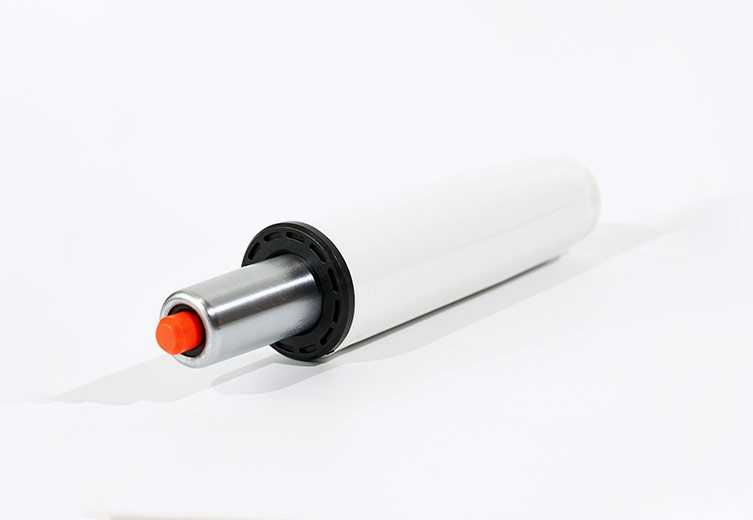
An office chair gas spring operates through compressed nitrogen gas (150-200 psi) contained within a sealed steel cylinder. When users activate the height lever, a valve opens allowing gas pressure to move the chair smoothly up or down. The cylinder connects the wheeled base to the seat mechanism through tapered friction-fit connections.
Key specifications:
- Standard diameters: 38mm, 45mm, 50mm
- Stroke lengths: 100mm, 140mm, 160mm
- Weight capacity: 100-150kg
- Material: Chrome-plated steel
- Service life: 5-10 years under normal use
Gas springs fail through seal deterioration, allowing gas to escape gradually. This creates the characteristic sinking problem. Internal component wear causes inconsistent adjustment or valve failure. Physical damage from impacts compromises cylinder integrity.
Note: Never attempt to disassemble or puncture gas cylinders—they contain dangerous pressurized gas. Replacement is the only safe solution.
Signs Requiring Replacement
Performance Issues
- Sinking chair: Gradually loses height after adjustment, requiring constant readjustment
- Difficult adjustment: Height lever requires excessive force or responds inconsistently
- Inconsistent speed: Chair rises or descends too quickly or too slowly
- Complete failure: No height adjustment possible regardless of lever position
Physical Damage
- Visible corrosion: Rust or pitting on chrome-plated rod
- Fluid leakage: Oily residue around cylinder or dripping onto base
- Deformation: Bent or misaligned cylinder preventing smooth operation
Safety Concerns
- Chair instability: Wobbling or unexpected tilting when sitting
- Unusual noises: Creaking, popping, or grinding during adjustment
- Sudden failure: Chair drops unexpectedly creating injury risk
Addressing these signs promptly prevents complete failure and maintains safe working conditions.
Tools and Materials Required
Essential Tools
- Pipe wrench or large adjustable wrench (10-12 inch)
- Rubber mallet or hammer with wood block
- Flathead screwdriver (for retaining clips)
- Safety goggles
- Work gloves
- Penetrating oil (optional, for stuck connections)
Selecting the Right Replacement
Match these critical specifications:
Diameter: Measure original cylinder outer diameter (38mm, 45mm, or 50mm)—must be exact match
Stroke Length: Determines height adjustment range
- 100mm: Limited range, compact chairs
- 140mm: Standard office chairs
- 160mm: Extended range, high-back chairs
Weight Capacity: Select capacity exceeding user weight by 20-30%
- Standard: 100-120kg
- Heavy-duty: 130-150kg
Quality Indicators:
- Thick-wall steel construction (1.2-1.5mm)
- Uniform chrome plating without thin spots
- Safety certifications (SGS, BIFMA, TÜV)
- Warranty coverage (1-3 years)
Step-by-Step Replacement Process
Step 1: Preparation
Clear a 6x6 foot workspace with good lighting. Organize all tools within reach and put on safety equipment.
- Inspect new gas spring for damage
- Photograph current assembly for reference
- Verify replacement matches specifications
Step 2: Remove Old Gas Spring
Remove from base:
- Invert chair so wheeled base points upward
- Remove any retaining clips with screwdriver
- Grip cylinder with pipe wrench just above base connection
- Apply steady downward pulling force while tapping base with mallet
- For stubborn connections, apply penetrating oil and wait 10-15 minutes
- Once freed, pull cylinder completely from base center column
Remove from seat:
- Access upper connection between seat and cylinder
- Grip cylinder body near seat bracket
- Pull while tapping seat mounting bracket with mallet
- Extract old cylinder completely
Tip: If extremely stuck, gentle heating (heat gun, not torch) on connecting fittings for 30-60 seconds helps break friction bonds. Never heat the cylinder body itself.
Step 3: Install New Gas Spring
Prepare connections:
- Clean base center column and seat bracket
- Remove debris or old lubricant
- Verify tapered surfaces are undamaged
Install to base:
- Orient new cylinder correctly (wider end typically downward)
- Align tapered fitting straight into base center column
- Apply downward pressure while rotating slightly
- Tap top of cylinder firmly with mallet to fully seat
- Verify secure connection by pulling—should resist removal
Install to seat:
- Position seat mechanism over cylinder's upper end
- Align seat bracket socket with cylinder top fitting
- Lower seat maintaining straight alignment
- Press firmly or tap seat to fully engage friction fit
- Check perpendicular alignment
Step 4: Test and Verify
Initial checks:
- Visual inspection of all connections
- Light pressure test before sitting
- Gentle sitting to verify stability
Functional testing:
- Raise chair through full range—should move smoothly
- Lower to minimum height—test consistent response
- Release lever at various positions—should maintain height without sinking
- Shift weight side to side—confirm stable support
- Perform 5-10 complete adjustment cycles
Properly installed gas springs operate silently with consistent, smooth adjustment throughout the entire range.
Troubleshooting Common Issues
Installation Problems
Cylinder won't seat properly:
- Verify straight alignment without cross-threading
- Check for debris preventing insertion
- Apply firmer seating force with mallet
- Confirm correct diameter specification
Feels loose or wobbly:
- Disassemble and reinstall with proper seating force
- Ensure friction fit engages completely
- Verify perpendicular alignment
Height lever doesn't work:
- Check cylinder orientation (valve faces upward)
- Verify lever engages cylinder's valve mechanism
- Adjust rotational positioning for proper alignment
Performance Issues
Chair still sinks:
- Confirm weight capacity meets requirements
- Test for defective cylinder (immediate vs. gradual sinking)
- Consider warranty replacement if defective
Inconsistent adjustment:
- Verify lever fully engages valve mechanism
- Check for mechanical interference
- Ensure proper cylinder orientation
Operational noise:
- Apply silicone lubricant to connection tapers
- Check all mounting points and pivot mechanisms
- Verify all connections are fully seated
Maintenance and Prevention
Extending Service Life
Usage practices:
- Distribute weight evenly across seat
- Avoid excessive side-loading or leaning
- Minimize unnecessary height adjustments
- Respect weight capacity specifications
Environmental protection:
- Maintain normal office temperatures (15-25°C)
- Clean cylinder surfaces monthly with mild detergent
- Address spills or corrosive substance exposure immediately
- Keep cylinder rod clean and free from abrasive particles
Regular Inspection
Monthly checks should identify:
- Visible corrosion or finish degradation
- Unusual adjustment sounds
- Gradual height loss
- Physical damage from impacts
- Loose mounting connections
Early detection enables proactive replacement before sudden failure occurs.
Selecting Quality Components
Quality Indicators
| Feature | Premium | Budget |
Wall Thickness | 1.2-1.5mm | 0.8-1.0mm |
Chrome Finish | Mirror-bright, uniform | Variable quality |
Weight Capacity | 130-150kg | 100-110kg |
Certification | Multiple standards | Often none |
Warranty | 1-3 years | Limited/none |
Service Life | 7-10 years | 3-5 years |
Supplier Considerations
Choose suppliers offering:
- Detailed specifications and compatibility information
- Clear return policies for sizing errors
- Technical support during selection and installation
- Positive customer reviews regarding product quality
- Reasonable pricing aligned with component quality
For reliable chair gas lift cylinder supplier services, COLEWELL provides professional-grade components meeting international safety standards with comprehensive technical support for successful office chair restoration.
Conclusion
Office chair gas spring replacement restores full functionality through a systematic process accessible to most users. Success requires accurate component selection matching diameter, stroke length, and weight capacity specifications. Proper installation techniques using controlled force and correct alignment ensure secure connections and reliable performance. Quality replacement components from reputable suppliers deliver 7-10 years of trouble-free operation, making this straightforward maintenance task highly cost-effective compared to chair replacement.
Frequently Asked Questions
How long does replacement take?
15-30 minutes for first-time replacement. Subsequent replacements are faster with experience. Stubborn connections may require 45-60 minutes.
Can any gas spring fit any chair?
No. Gas springs require exact diameter match and appropriate stroke length. Always verify specifications before purchasing.
What weight capacity should I choose?
Select capacity exceeding user weight by 20-30%. Standard cylinders handle 100-120kg; heavy-duty versions support 130-150kg.
Is stiffness normal in new cylinders?
Yes. New cylinders may feel slightly stiff for the first 10-15 adjustment cycles as components settle. Should become smooth quickly.
When should I seek professional help?
Consider professional service for multiple failed installation attempts, specialized chair designs, physical limitations, or uncertainty about specifications.


